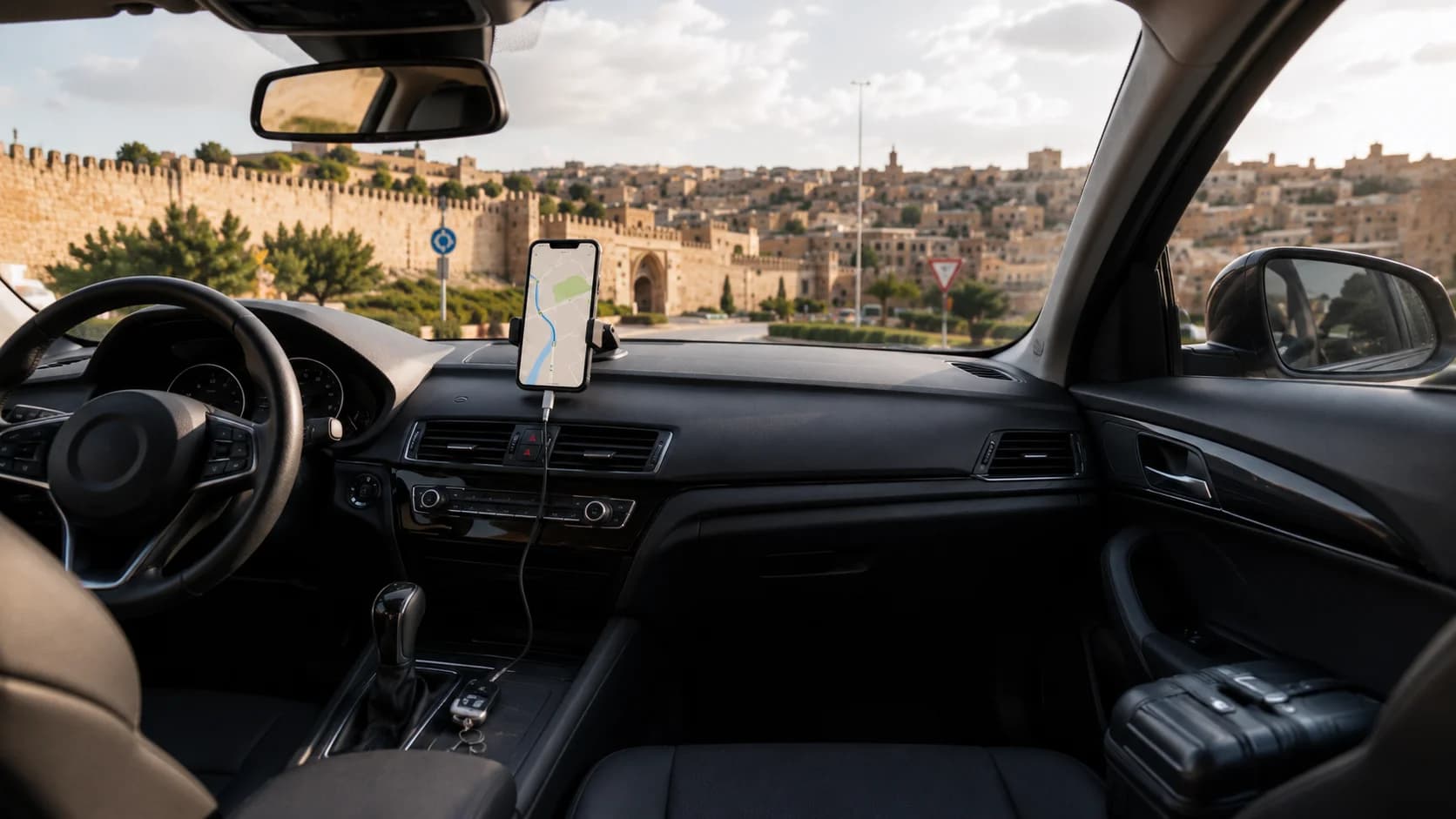









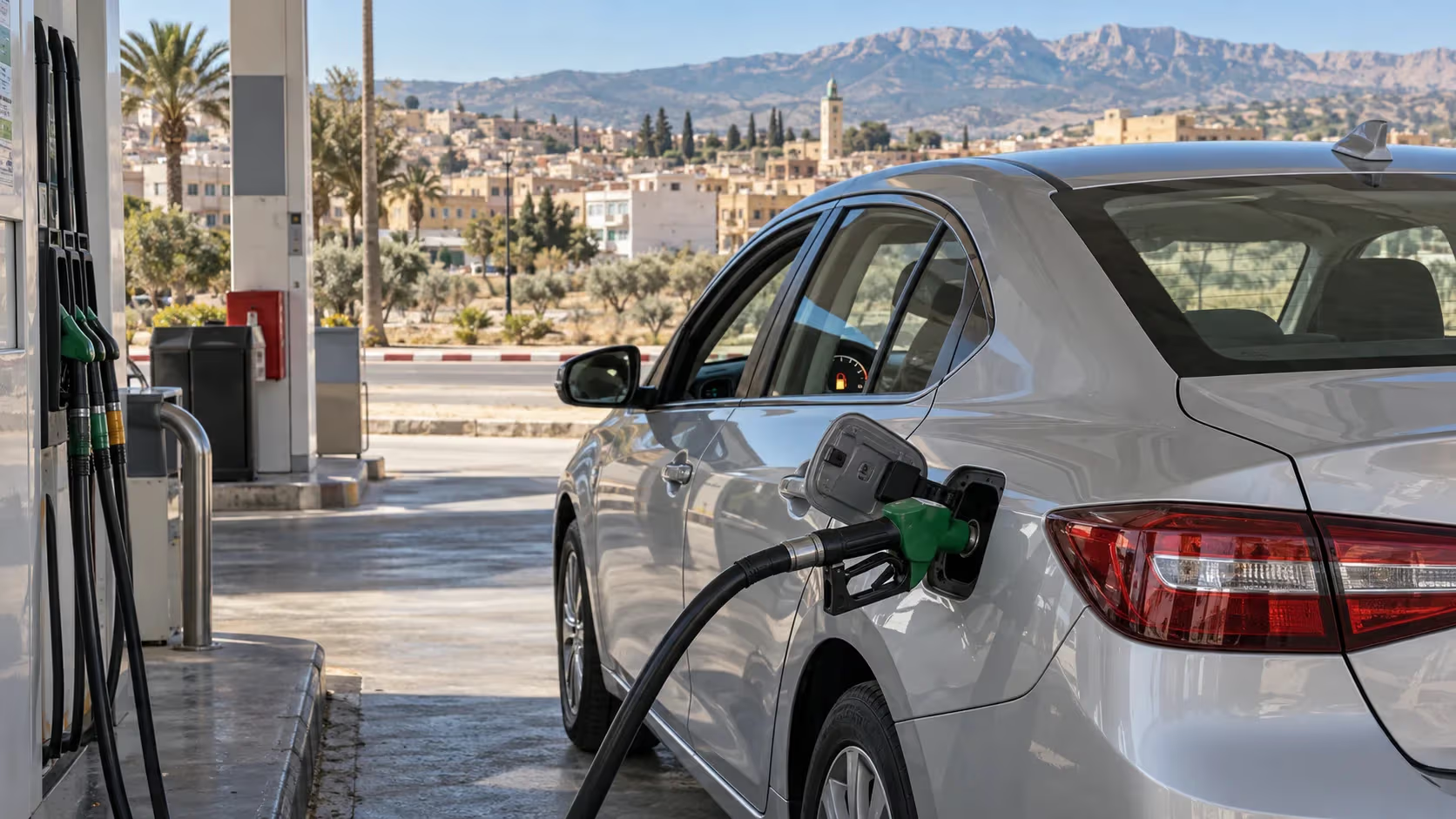
Understanding your Fes rental car fuel policy before driving away can prevent one of the most common sources of confusion at vehicle return.
With a same-to-same policy, the important number is not necessarily a full tank. What matters is the fuel level agreed and recorded when the vehicle is handed over. If you receive the car with three-quarters of a tank, for example, the normal expectation is to return it at approximately the same level.
The easiest approach is to confirm the fuel level and fuel type at pickup, take a quick photograph of the dashboard, and plan your final refuelling before returning the vehicle.
Table of Contents
- What fuel policy applies to Fes rentals?
- How same-to-same fuel works
- Record the fuel level at pickup
- Confirm petrol or diesel before refuelling
- Planning fuel stops during the rental
- Refuelling before airport or city return
- What to do if the gauge differs at handover
- Fuel-policy checklist
- Frequently asked questions
What Is the Fes Rental Car Fuel Policy?
MarHire Car Fes uses a same-to-same fuel policy: you return the rental vehicle with approximately the same fuel level recorded when you received it.
That means a vehicle collected with half a tank should normally be returned with about half a tank. A vehicle supplied full should be returned full.
Always check your booking-specific handover information because the recorded starting level for your individual vehicle is what matters.
Fuel used while driving is separate from the rental charge and also separate from the vehicle's mileage allowance.
Looking for a vehicle first? Explore car rental Fes options before confirming the pickup and return conditions for your booking.
What Fuel Policy Applies to Fes Rentals?
The standard principle is same-to-same rather than automatically assuming every vehicle must leave and return with a completely full tank.
At handover, the current fuel level should be identified. You then use the vehicle normally during your rental and return it with approximately that same amount.
For example:
| Fuel level at pickup | Expected level at return |
|---|---|
| Full | Approximately full |
| Three-quarters | Approximately three-quarters |
| Half | Approximately half |
| Quarter tank | Approximately quarter tank |
The specific reading agreed at pickup takes priority over assumptions about how rental companies normally handle fuel.
This is particularly useful to remember when collecting vehicles that have recently been returned by another customer or delivered directly to a hotel, riad or another agreed location.
How Same-to-Same Fuel Works
A same-to-same fuel policy Fes arrangement is straightforward.
Suppose you collect your rental and the dashboard shows slightly more than half a tank. That level is recorded during the handover. You can then drive, refuel as necessary and continue your trip.
Before returning the vehicle, you add enough fuel to bring the gauge back to approximately the original level.
You do not need to fill the tank completely simply because the rental is ending if you did not receive the vehicle with a full tank.
Likewise, if the car was supplied full, returning it substantially below full would not satisfy a same-to-same agreement.
Fuel gauges are not precision measuring devices, so the objective is a reasonable match to the recorded level rather than trying to reproduce an exact quantity to the litre.
Same-to-same is different from full-to-full
Full-to-full requires the vehicle to start and finish with a full tank.
Same-to-same instead follows the fuel level actually provided at collection.
Reading the handover information before leaving is therefore more reliable than assuming you have a full-to-full rental.
Record the Fuel Level at Pickup
One of the simplest things you can do when collecting a rental car in Fes is photograph the dashboard before beginning your journey.
The image should clearly show the fuel gauge. If practical, also capture the mileage reading in the same photo.
This creates an easy reference when you are preparing to return the vehicle several days later.
Before leaving the pickup point, make sure the fuel level shown on the dashboard matches the level recorded by the rental team.
If something looks different, mention it immediately.
For example, if the paperwork indicates three-quarters but the dashboard appears closer to half, resolve the difference before driving away rather than waiting until return day.
This check takes only a few moments and can make the final handover considerably easier.
Travelers prioritizing overall trip cost can also compare cheap car rental Fes options, but remember that vehicle price, fuel consumption and fuel policy are three different considerations.
Confirm Petrol or Diesel Before Refuelling
Never choose fuel based only on what you normally use at home.
Rental fleets can include both petrol and diesel models, including different versions of cars that otherwise look almost identical.
Before your first fuel stop, confirm what the particular vehicle requires.
You can check the information provided during the handover and, where applicable, the label around the fuel-filler area. If there is any uncertainty, contact the rental team before adding fuel.
Putting the wrong fuel into a vehicle can cause serious mechanical problems, so guessing is not worth the risk.
When asking at a service station, make it clear whether the vehicle requires petrol or diesel before the attendant begins refuelling.
This is especially important when several drivers are sharing the same rental. Make sure everyone who may refuel the vehicle knows the correct fuel type.
Planning Fuel Stops During the Rental

There is no need to wait until the tank is almost empty before refuelling.
How frequently you need fuel depends on your vehicle, driving style, route and distance.
Someone using a compact car mainly around Fes may have very different requirements from a traveler driving through several Moroccan cities.
For longer journeys, refuelling when convenient can be better than planning around the final few kilometres of remaining range.
This becomes more important on road trips outside major urban areas. Do not assume the next convenient station will always appear exactly when you need one.
If your priority is motorway travel, luggage space and comfortable longer journeys, a sedan rental Fes may suit your itinerary, but actual fuel consumption will still vary by vehicle and driving conditions.
Fuel policy and mileage policy are different
A particularly important distinction is that your fuel agreement does not determine how many kilometres you are allowed to drive.
Fuel policy answers:
How much fuel should be in the vehicle when it is returned?
Mileage policy answers:
How many kilometres are included in the rental agreement?
A vehicle can have a same-to-same fuel rule whether the booking has a daily kilometre allowance or unlimited kilometres.
Similarly, unlimited kilometres does not mean fuel is included.
Refuelling Before Airport or City Return
Return day is where a little planning helps most.
If you are returning at Fès–Saïss Airport (FEZ), do not wait until you have already reached the terminal area before checking the gauge. FEZ is the official IATA code for Fès–Saïss Airport.
Instead, review the fuel level earlier in the journey and leave enough time to refuel before reaching the agreed handover point.
The same principle applies to city returns, hotel collections and other arranged drop-off locations.
Trying to find fuel while also watching a flight departure time can create unnecessary pressure.
A good return sequence is simple: check the gauge, refuel if necessary, keep the receipt if useful, drive to the agreed return point and check the gauge again before handing over the keys.
Remember that driving from a service station to the airport or return address will itself use a small amount of fuel. Choose a reasonably convenient final stop rather than refuelling far away and expecting the gauge to remain unchanged.
Fuel-station locations and opening conditions can change, so check your preferred station on the day rather than relying on an old travel guide.
What to Do If the Gauge Differs at Handover
If you arrive for the return and the fuel gauge is noticeably below the agreed level, tell the rental representative rather than ignoring the difference.
Depending on the handover situation, you may be able to add the missing fuel before completing the return.
If there is disagreement about the original level, your pickup photograph, handover record and any relevant messages can help establish what was agreed.
The same principle works in the other direction.
If your dashboard at pickup showed less fuel than the booking or handover record stated, raise the discrepancy before leaving.
Resolving these differences while both parties can inspect the vehicle is much easier than trying to reconstruct the situation later.
Should you keep fuel receipts?
You do not normally need to collect every fuel receipt during an ordinary rental.
However, keeping the receipt from your final refuelling can be useful, especially when you fill shortly before the vehicle is returned.
A receipt can document when and where you refuelled if a question arises during handover.
Fuel-Policy Checklist
| Before driving away | During the rental | Before returning |
|---|---|---|
| Confirm the agreed fuel level | Monitor the fuel gauge | Check the original recorded level |
| Photograph the dashboard | Refuel before running very low | Plan a convenient final fuel stop |
| Confirm petrol or diesel | Always use the correct fuel type | Add enough fuel to match pickup |
| Check the handover record | Keep useful receipts if needed | Keep the final receipt when useful |
| Resolve discrepancies immediately | Keep fuel separate from mileage rules | Photograph the final gauge if appropriate |
The most important step is consistency: know what you received and return approximately the same amount.
Frequently Asked Questions
What fuel policy does MarHire Car Fes use?
MarHire Car Fes uses a same-to-same fuel policy. The vehicle should be returned with approximately the same fuel level recorded when it was handed over. Check the booking-specific level when collecting your car.
What does same-to-same fuel mean?
Same-to-same means the fuel level at return should approximately match the level at pickup. If you receive the vehicle with half a tank, you return it with approximately half a tank.
Do I need to return the car with a full tank?
Not automatically. Under a same-to-same policy, you only need a full tank at return when the car was supplied full or your specific booking says otherwise.
How do I know whether the rental uses petrol or diesel?
Confirm the fuel type during the vehicle handover and check the vehicle information or fuel-filler label where applicable. If you are uncertain, contact MarHire Car Fes before refuelling rather than guessing.
Should I photograph the fuel gauge at pickup?
Yes. A clear dashboard photograph gives you a useful record of the fuel level you received and makes it easier to plan the correct level for return.
Where should I refuel before returning at Fes Airport?
Choose a convenient service station along your route toward Fès–Saïss Airport rather than leaving refuelling until you reach the terminal. Check current station locations and opening information on the day of return because these can change.
What happens if I return with less fuel than agreed?
A fuel difference may need to be resolved according to your booking and handover conditions. When possible, notice the difference early enough to refuel before completing the return.
Does unused fuel get refunded?
Do not assume that fuel added beyond the agreed return level will be refunded. With a same-to-same rental, the best approach is to return approximately the amount you received rather than substantially overfilling the vehicle.
Is fuel included in the rental price?
The fuel you consume while driving is normally your responsibility unless your specific booking explicitly states otherwise. The rental charge and the cost of fuel used during the trip should be treated separately.
Is fuel policy the same as mileage policy?
No. Fuel policy determines the amount of fuel expected at return. Mileage policy determines how many kilometres are included in your rental agreement. A vehicle can have a same-to-same fuel policy regardless of its kilometre allowance.
Final Advice for an Easy Fes Rental Car Return
The Fes rental car fuel policy does not need to make return day complicated.
Confirm the starting level when you collect the vehicle, photograph the dashboard, verify whether the car takes petrol or diesel and keep the fuel policy separate from your kilometre allowance.
When your trip is nearly finished, check the gauge early enough to make a relaxed final fuel stop rather than searching for a station immediately before an airport or city handover.
Most importantly, use the fuel level documented for your particular vehicle rather than assuming every rental must be returned full.
Avoid return-day confusion: confirm the agreed fuel level and fuel type with MarHire Car Fes at pickup, record the dashboard and plan your final refuelling before the handover.