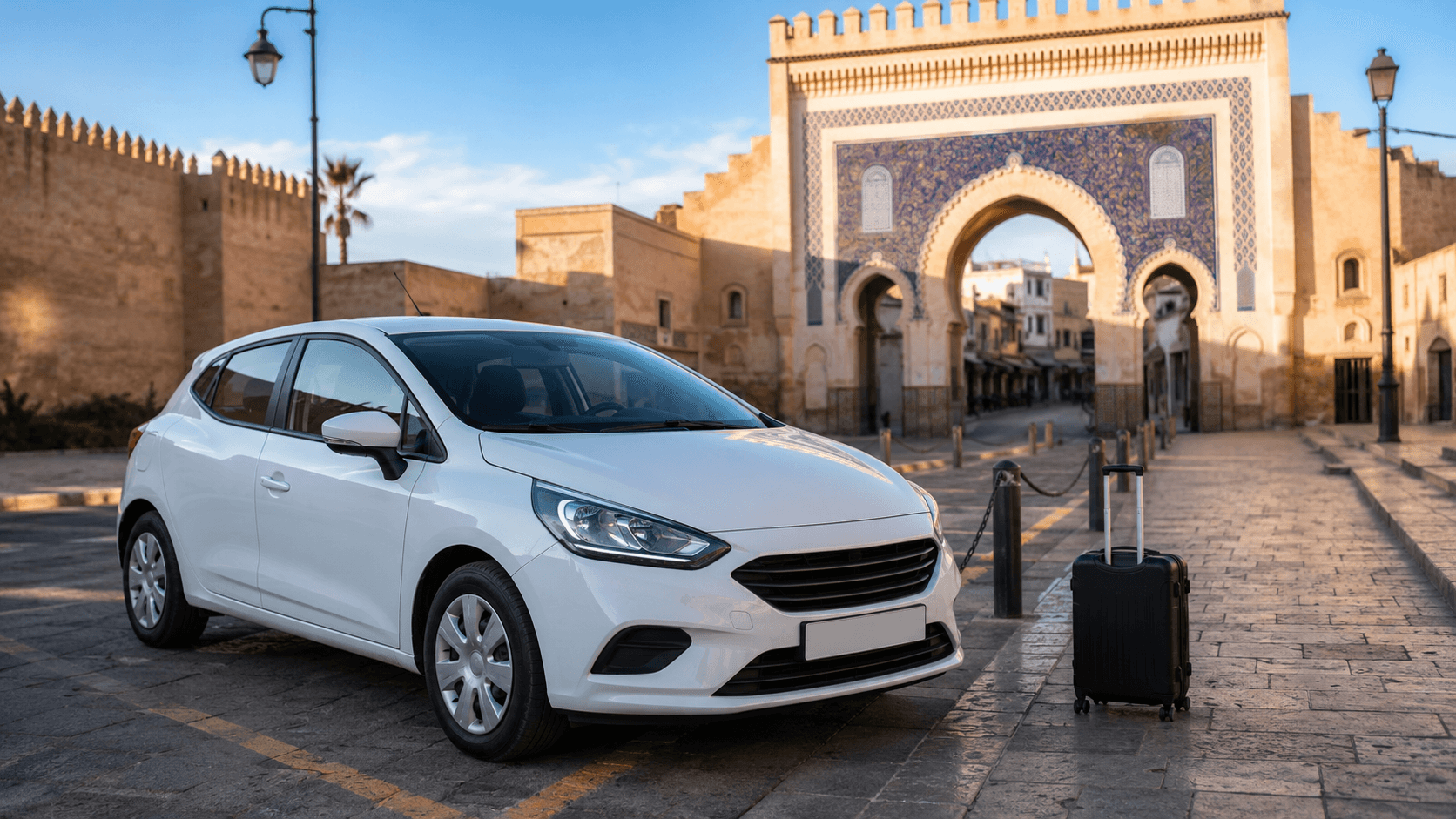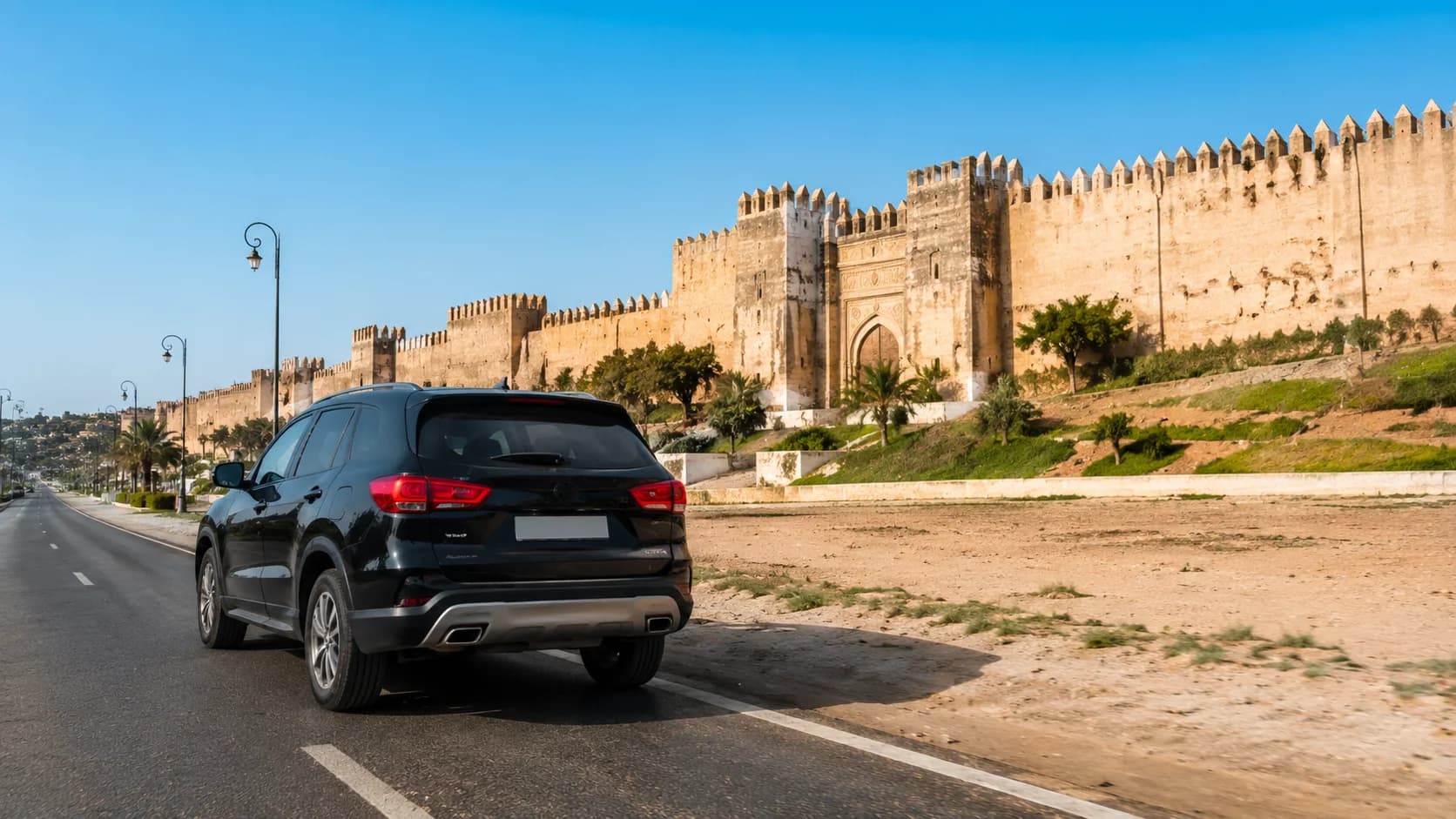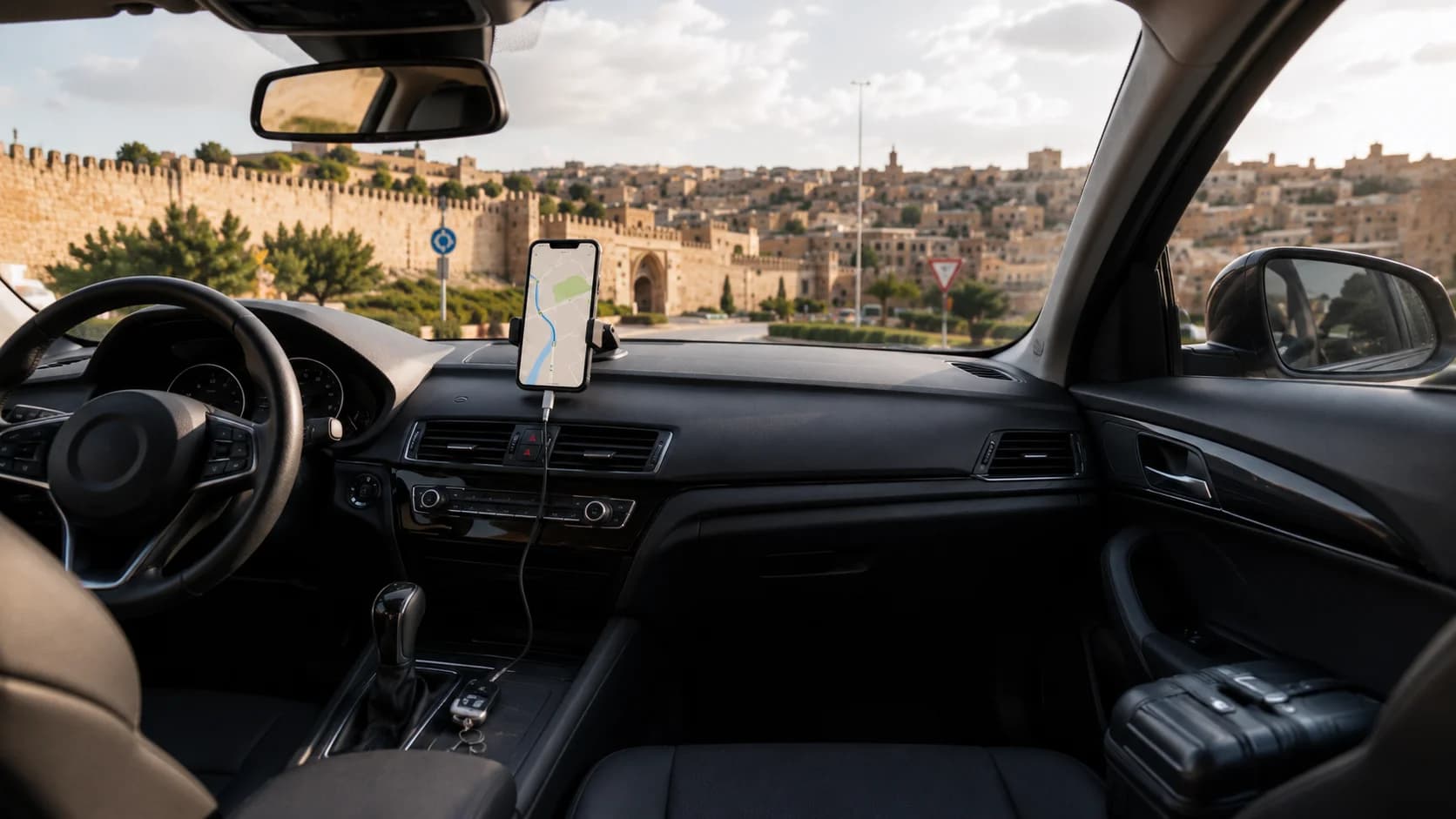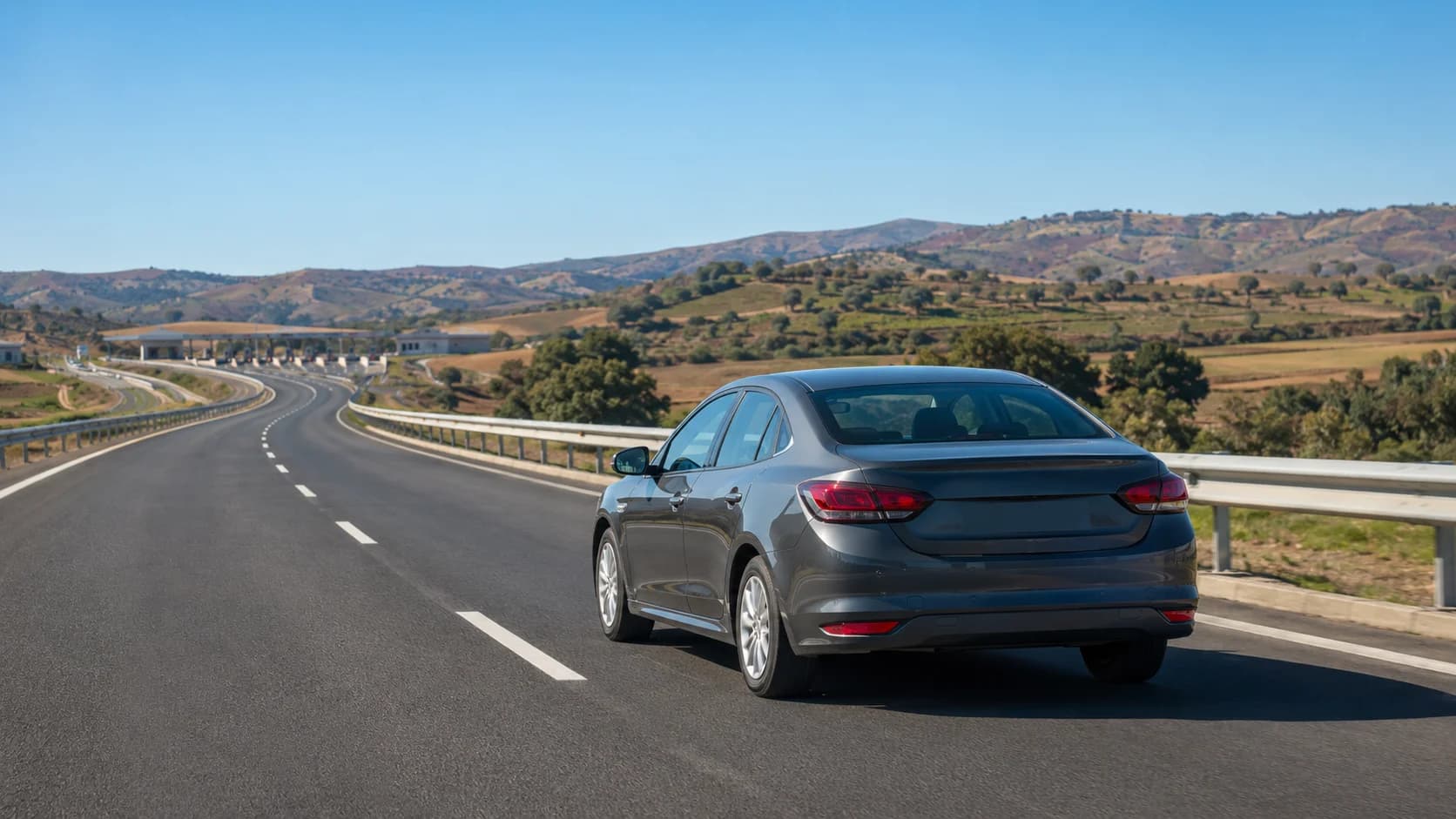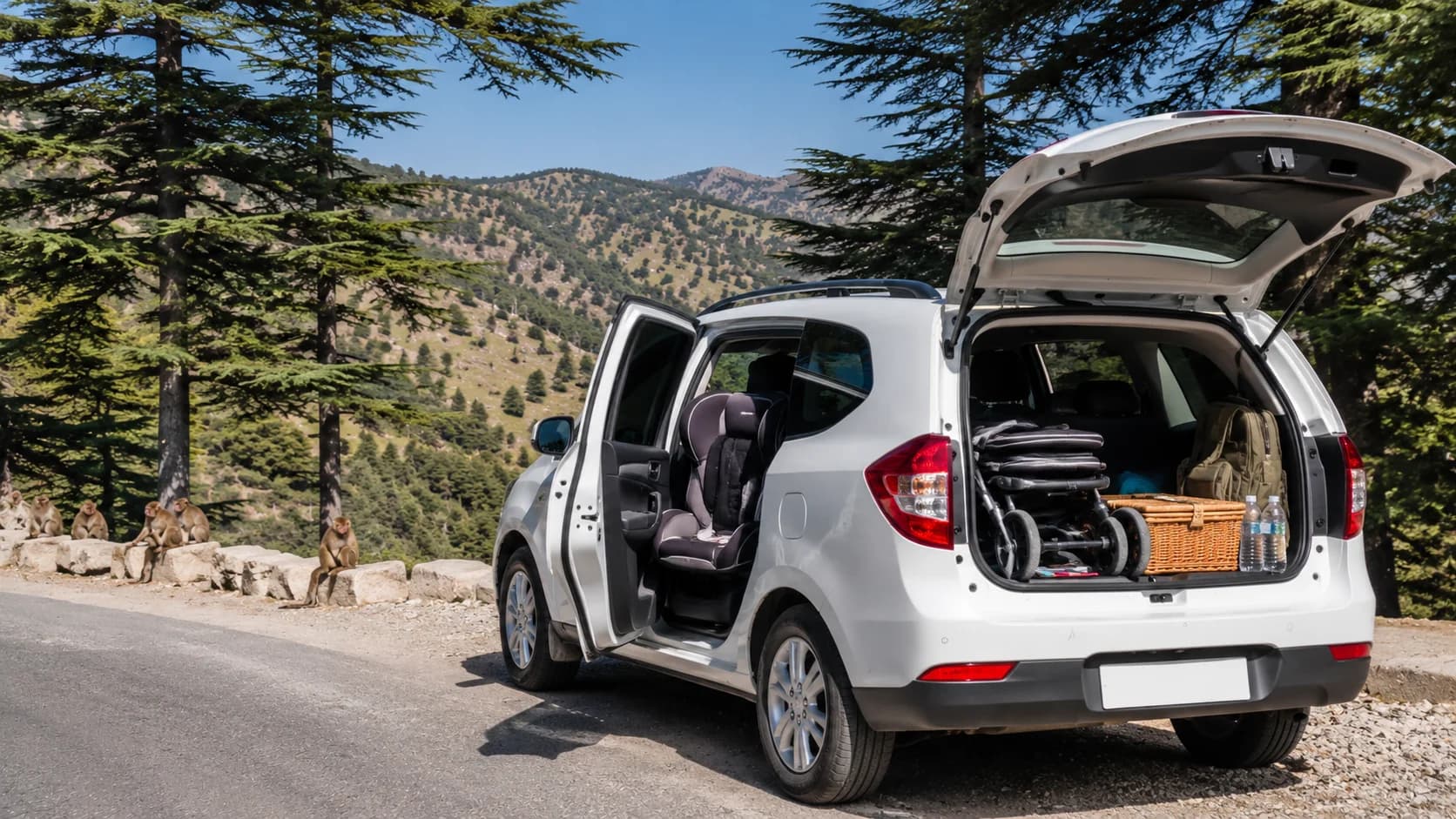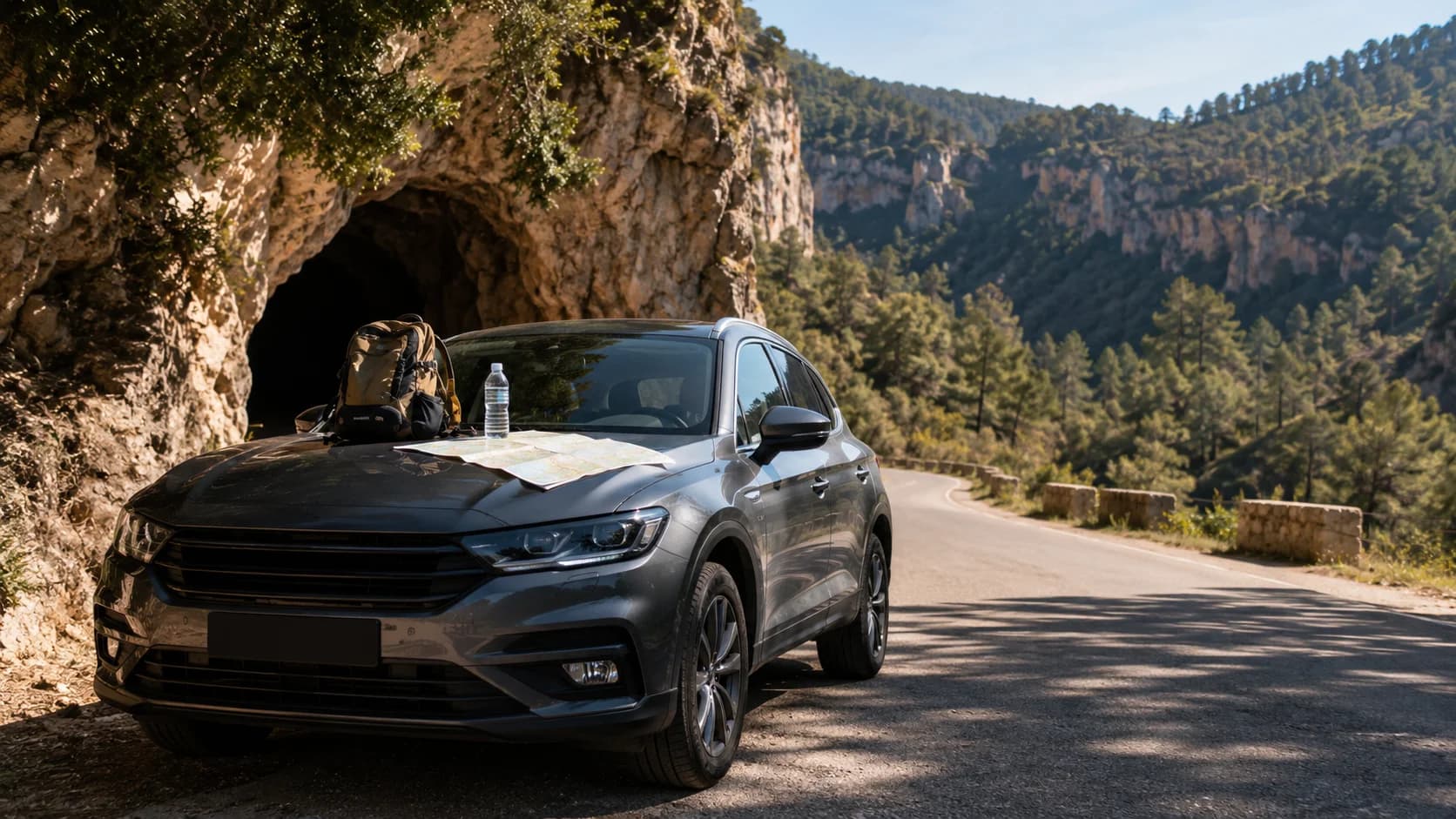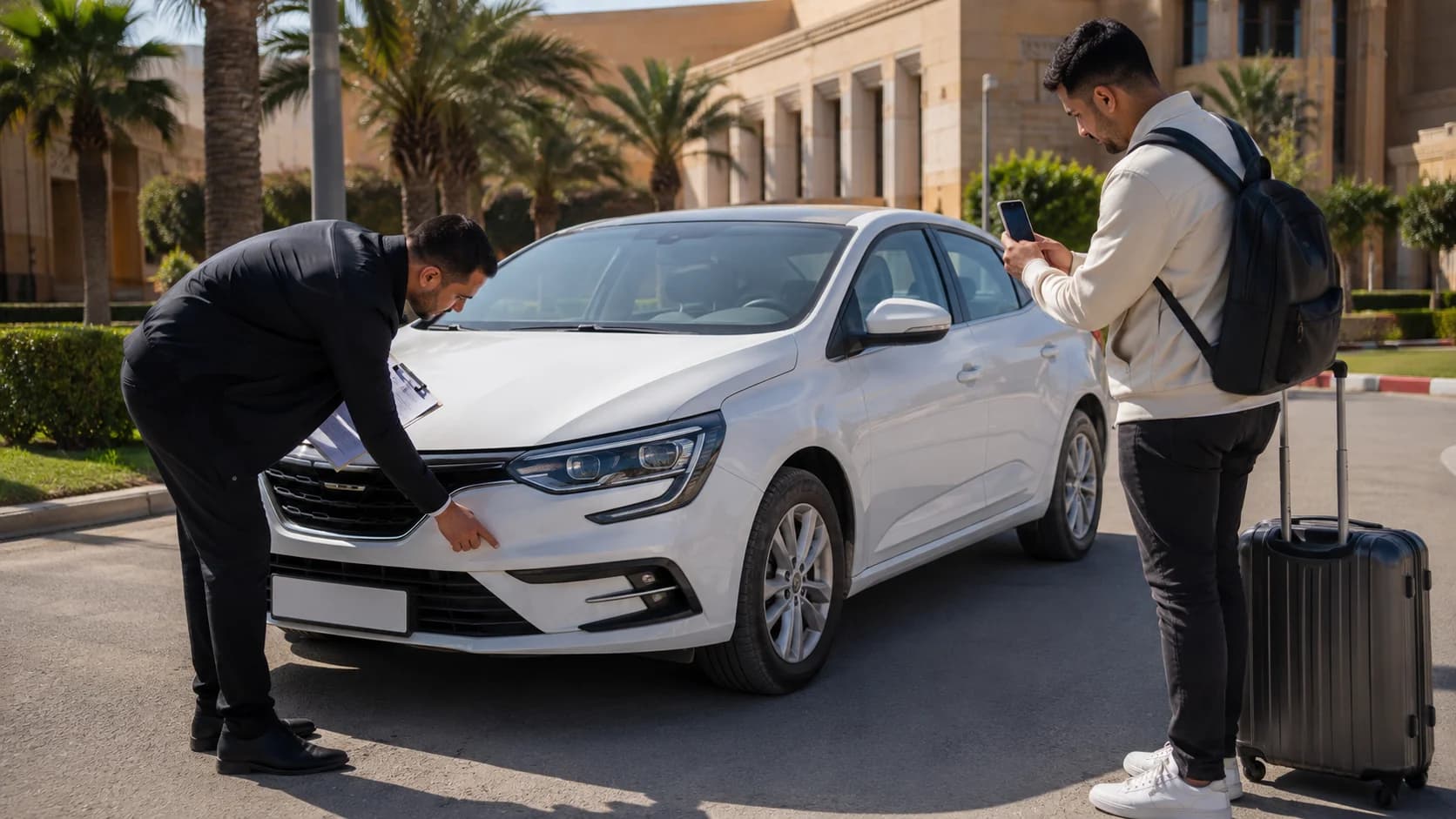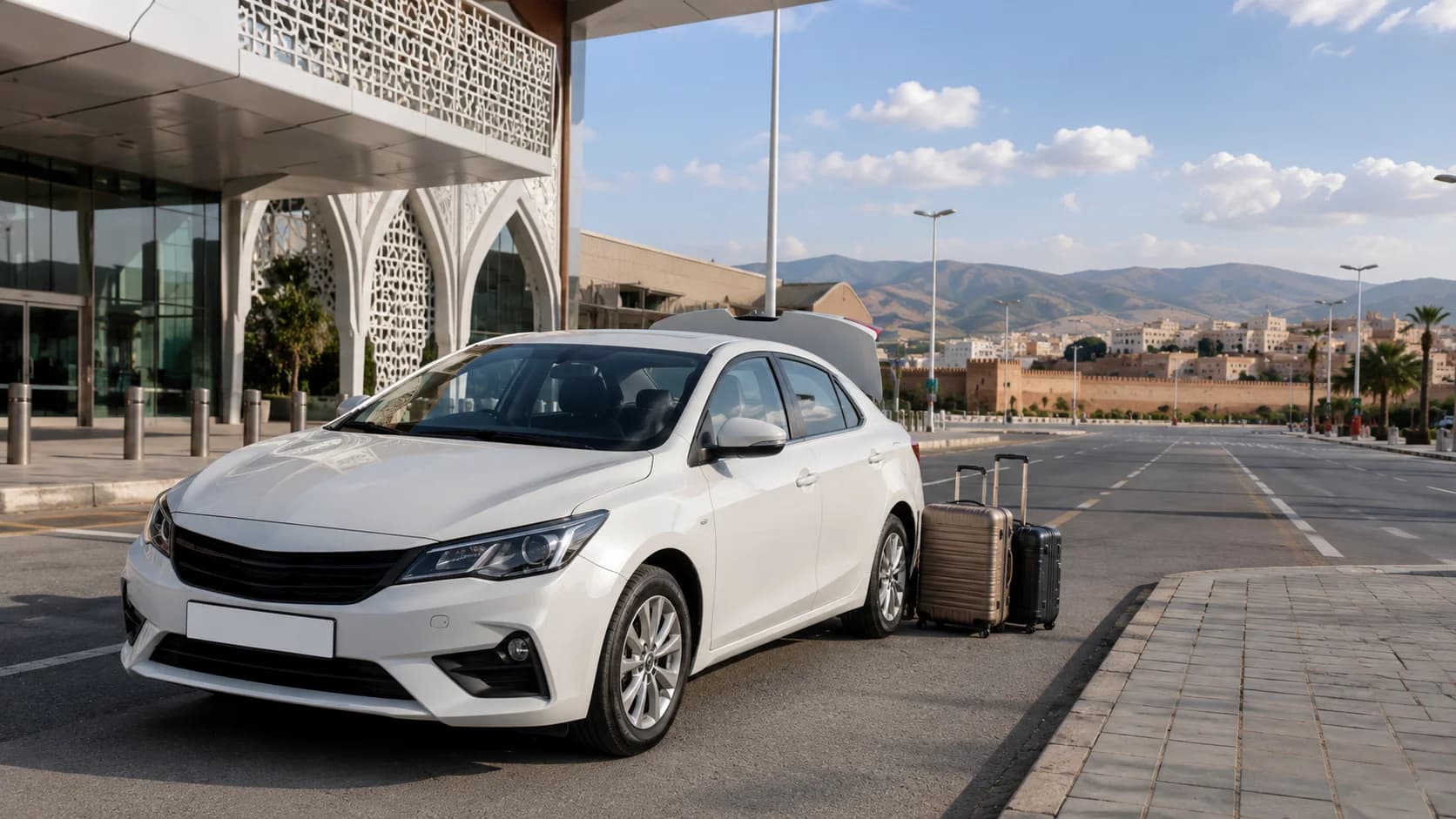









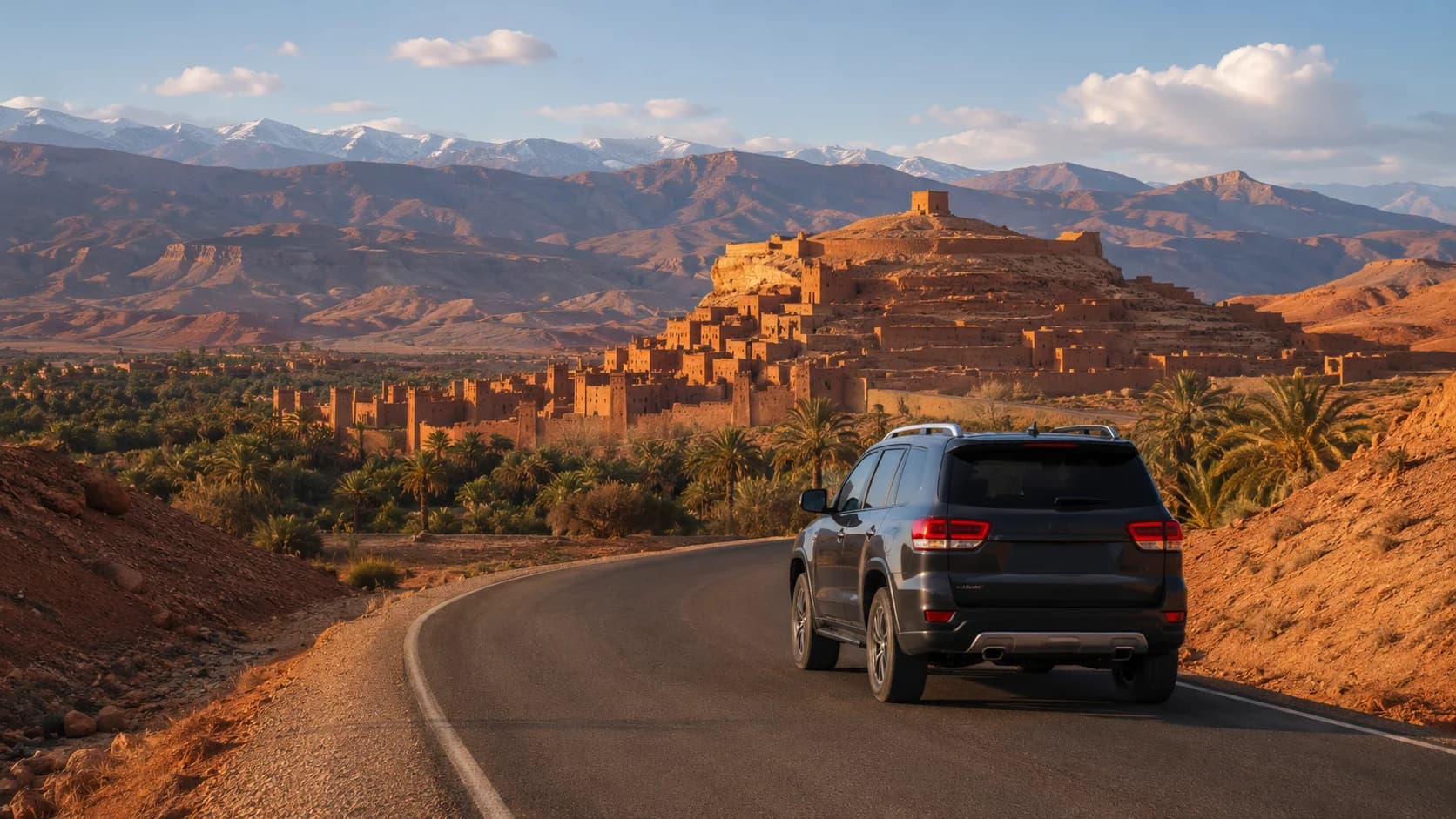
Driving from Fes to Ouarzazate by car is one of Morocco’s great long-distance road trips. It is not a simple city-to-city transfer. It is a full southern route that moves from the imperial atmosphere of Fes into cedar forests, Middle Atlas towns, desert valleys, kasbah landscapes and finally the film-set world of Ouarzazate and Aït Benhaddou. Most travelers should plan it as a 2-day road trip, especially if they want to enjoy the stops instead of spending the whole day behind the wheel.
Table of Contents
-
The southern route at a glance
-
Fes to Ouarzazate: distance and time
-
Crossing the Middle and High Atlas
-
Aït Benhaddou: the film-set kasbah
-
Suggested 2-day itinerary
-
Best car for mountain passes
-
Tizi n'Tichka driving tips
-
Fuel, cash and timing
-
One-way drop-off options
-
Plan your kasbah road trip
-
FAQs
The southern route at a glance
The classic Fes to Ouarzazate road trip is best understood as a route through changing Moroccan landscapes. You leave Fes, pass toward Ifrane and Azrou, continue to Midelt, descend toward Errachidia and the Ziz Valley, then move through the south-eastern corridor toward Tinghir, the Dades area, Skoura and Ouarzazate. From Ouarzazate, Aït Benhaddou is a short side trip to the west.
This is the kind of drive where the route matters as much as the destination. The first part gives you mountain air, cedar scenery and Middle Atlas views. The middle section opens into dry valleys and oasis towns. The final approach to Ouarzazate brings the classic kasbah scenery that many travelers imagine when they think of southern Morocco.
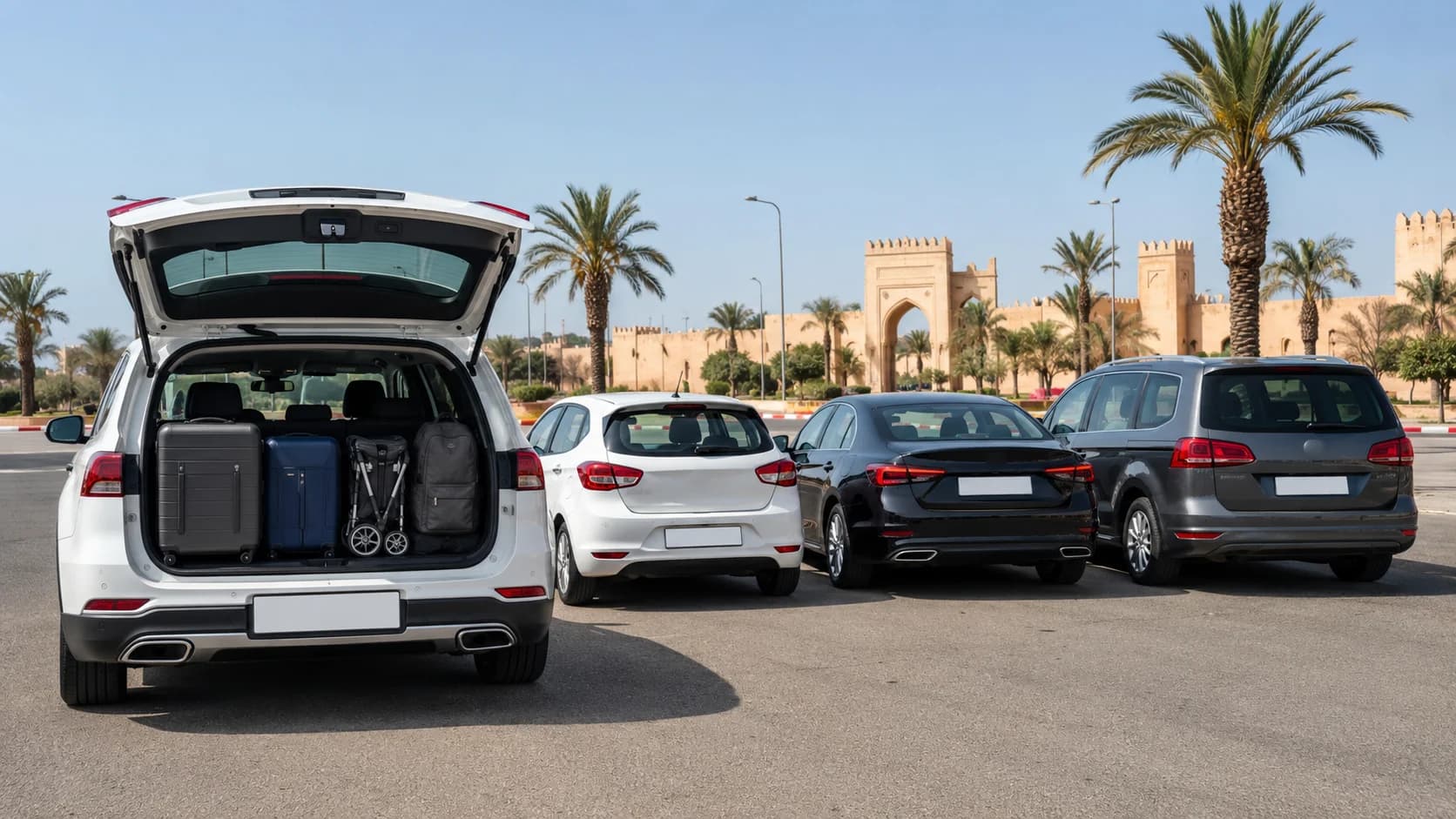
For travelers renting a car in Fes, this route is ideal for a higher-clearance vehicle. A normal car can handle many paved sections in good conditions, but a comfortable SUV or 4x4 gives more confidence on long roads, mountain bends, rougher approach tracks, luggage-heavy trips and changing weather. You can compare a 4x4 rental Fes option or choose an SUV rental Fes if you want a more comfortable road-trip vehicle without going too large.
Fes to Ouarzazate: distance and time
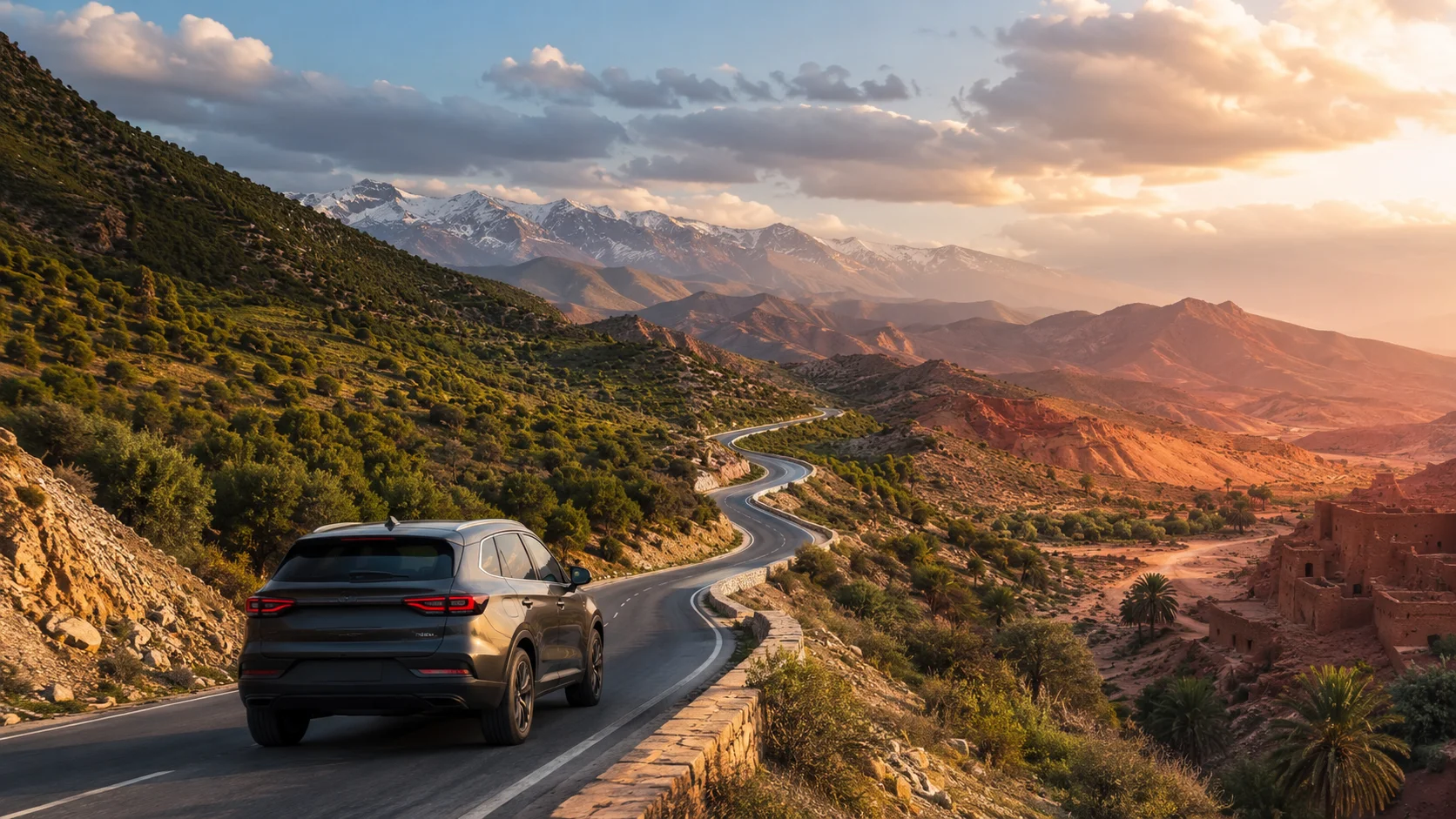
The distance from Fes to Ouarzazate depends on the exact route chosen. Some route planners show a shorter driving option of around 545 km, while other distance tools calculate the longer driving route closer to 720 km or more, especially when routing through the scenic south-eastern corridor. This is why real drive times can vary from around 9 hours to a full 11 hours before long sightseeing stops.
For a travel blog audience, the practical answer is simple: do not treat Fes to Ouarzazate as a relaxed one-day tourist drive. It can be done in one long day by experienced drivers, but it is much better as a 2-day itinerary. This gives you time for lunch, viewpoints, fuel stops, photos and a safer pace through mountain and valley roads.
If your goal is only to reach Ouarzazate, start early and keep stops short. If your goal is the kasbah route Morocco experience, split the drive and sleep around Midelt, Errachidia, Tinghir or the Dades area depending on your pace. The more you want to see, the more sense it makes to slow the trip down.
Crossing the Middle and High Atlas
The first major change after Fes is the climb toward the Middle Atlas. This section is cooler than the plains and can feel completely different from the medina streets you left behind. Around Ifrane and Azrou, the road becomes greener, with forest scenery and mountain bends before the landscape opens toward Midelt.
After Midelt, the route begins to feel more southern. The road moves toward Errachidia and the Ziz Valley, where the scenery becomes drier and more dramatic. You start to see the transition from northern Morocco into the pre-Saharan south: long valleys, rocky slopes, palm groves and open horizons.
This is where patience matters. The Fes Ouarzazate road trip is not difficult in the sense of needing off-road driving skills on the main paved route, but it is long. You need daylight, attention, fuel planning and realistic timing. Avoid rushing the bends, avoid late-night driving when possible and keep your stops planned around larger towns.
Aït Benhaddou: the film-set kasbah
Aït Benhaddou is the highlight many travelers add to Ouarzazate. The ksar is a UNESCO World Heritage site and one of Morocco’s best-known examples of southern earthen architecture. UNESCO describes it as an important example of a ksar in southern Morocco, with traditional earthen construction linked to the valleys of Dra, Todgha, Dadès and Souss.
The village is famous because it looks cinematic even before you know its film history. Mud-brick towers, compact houses, narrow paths and the hilltop view make it one of the most photographed places in the south. It is often associated with international productions filmed in or around the Ouarzazate area, including Gladiator, The Mummy and Game of Thrones, although some scenes connected to the region were filmed in nearby studios rather than inside the ksar itself.
From Ouarzazate, Aït Benhaddou is usually visited as a half-day stop. Go early morning for softer light and fewer crowds, or late afternoon if you want warmer colors on the earthen buildings. Wear comfortable shoes because the visit involves walking, steps and uneven surfaces.
Suggested 2-day itinerary
Day 1: Fes to Midelt, Ziz Valley and Tinghir or Dades
Leave Fes early in the morning. The first stretch toward Ifrane and Azrou is good for a short coffee stop, but do not spend too long there if your target is the south. Continue toward Midelt for lunch or a fuel stop, then drive toward Errachidia and the Ziz Valley.
If you want a balanced first day, sleep around Tinghir or the Dades area. This gives you a useful overnight base before the final approach to Ouarzazate. It also makes the route feel like a real road trip instead of one exhausting transfer.
Day 2: Todra, Dades, Skoura, Ouarzazate and Aït Benhaddou
Start early again. If you slept near Tinghir, you can add a short visit to Todra Gorge. If you slept around Dades, enjoy the valley scenery before continuing toward Skoura. Skoura is known for palm groves and kasbah views, making it a natural final stop before Ouarzazate.
Arrive in Ouarzazate by afternoon, then continue to Aït Benhaddou if you still have daylight. If you prefer a slower pace, stay overnight in Ouarzazate and visit Aït Benhaddou the next morning. This is often the better choice for travelers who want photos, a relaxed walk and time to enjoy the site.
Best car for mountain passes
You do not always need a 4x4 for the main paved route from Fes to Ouarzazate and Aït Benhaddou. Many travelers complete paved sections in a standard rental car. However, the best car for this route is usually a higher-clearance SUV or 4x4 because the journey is long, the roads include mountain sections, and some guesthouse access roads or viewpoint approaches can be rougher than the main road.
An SUV is a strong choice for couples, families and small groups who want comfort, luggage space and better visibility. A 4x4 is better if you plan to add remote valleys, desert-side tracks, mountain detours or guesthouses reached by unpaved access roads. The benefit is not only off-road ability. It is also stability, comfort and peace of mind over a long southern road.
For budget-conscious travelers, a no deposit car rental Fes option can be useful when available, especially for standard categories. For this particular route, though, do not choose only by price. Choose by comfort, luggage needs, insurance details and route confidence.
Tizi n'Tichka driving tips
Tizi n'Tichka is important, but it needs to be placed correctly in the itinerary. The direct Fes to Ouarzazate route does not normally require crossing Tizi n'Tichka. This pass is mainly relevant if you continue from Ouarzazate or Aït Benhaddou toward Marrakech on the N9 road through the High Atlas. Official Morocco tourism material lists Tizi n Tichka among the key places in the Ouarzazate, Zagora and Tinghir region.
If your road trip ends in Marrakech, treat Tizi n'Tichka as a serious mountain crossing. Drive it in daylight, keep both hands on the wheel, avoid risky overtaking and expect slow vehicles on bends. Weather can change quickly in mountain areas, especially in winter, so check conditions before leaving Ouarzazate.
A higher-clearance SUV is not mandatory for the paved N9, but it is more comfortable for passengers and luggage. If anyone in the car gets motion sickness, plan breaks because the road has many curves. Keep water in the car, charge your phone and avoid starting this section too late in the day.
Fuel, cash and timing
Fuel planning is simple if you use the main towns. Fill up before leaving Fes or near the exit, then top up around Midelt, Errachidia, Tinghir or Ouarzazate depending on your route. Do not wait until the tank is low in remote sections because stations are not always evenly spaced.
Carry cash in Moroccan dirhams. Cards are accepted in many larger fuel stations, hotels and restaurants, but small cafés, parking areas, local guides, viewpoints and rural stops may be cash-only. It is better to ask before filling if you plan to pay by card.
Timing matters more than speed. Leave early, avoid night driving on unfamiliar mountain roads, and keep extra time for roadworks, slow trucks, weather or photo stops. A road trip like this is more enjoyable when you are not racing the clock.
One-way drop-off options
A one-way rental can make the Fes to Ouarzazate route much easier. Instead of driving all the way back to Fes, you can plan a route that continues to Marrakech, Agadir, Casablanca or another city depending on your full Morocco itinerary.
This is especially useful for travelers building a north-to-south Morocco road trip. You can start in Fes, drive through the Middle Atlas and kasbah route, visit Ouarzazate and Aït Benhaddou, then continue over Tizi n'Tichka to Marrakech. With the right rental plan, you avoid backtracking and save a full day of driving.
Ask in advance about one-way drop-off fees, insurance coverage, allowed route areas and pickup or return points. For long routes, it is also worth confirming unlimited kilometers, roadside support and whether the exact vehicle category is suitable for mountain travel.
Plan your kasbah road trip
The Route of a Thousand Kasbahs is one of the best reasons to rent a car in Morocco. It gives you control over stops, photos, timing and overnight choices. From Fes, the journey to Ouarzazate and Aït Benhaddou is long, but it rewards travelers who plan it properly.
For the best experience, book a higher-clearance SUV or 4x4 from MarHire Car Fes, confirm your insurance details, plan your overnight stop and leave enough time for the valleys before Ouarzazate. Unlimited kilometers, full insurance and local pickup support make a big difference on a route where distance and comfort matter.
Take on the Route of a Thousand Kasbahs with confidence. A higher-clearance SUV or 4x4 from MarHire Car Fes handles the Atlas roads more comfortably, with unlimited kilometers and full insurance included.
FAQs
How far is Ouarzazate from Fes?
The distance depends on the route. Some route planners show around 545 km, while scenic road-trip routes through the southern valleys can be closer to 700 km or more. For planning, treat it as a full-day drive and ideally split it over two days.
How long does the Fes to Ouarzazate drive take?
A direct drive can take around 9 to 11 hours depending on route, stops, traffic and road conditions. With sightseeing stops, lunch and photo breaks, it is better planned as a 2-day road trip.
Is Aït Benhaddou worth visiting?
Yes. Aït Benhaddou is one of the most iconic kasbah-style sites in Morocco and a UNESCO World Heritage site. It is especially worth visiting if you are already driving to Ouarzazate.
Do you need a 4x4 for the kasbah route?
You do not always need a 4x4 for the main paved roads, but an SUV or 4x4 is more comfortable for long distances, mountain sections, luggage, rougher access roads and optional detours.
Is it safe to drive over the High Atlas passes?
It can be safe with careful driving, daylight timing and good weather. Avoid risky overtaking, slow down on bends, check winter conditions and do not start mountain crossings too late in the day.
Should you split the drive over two days?
Yes, for most travelers. Splitting the drive makes the route safer and more enjoyable. It also gives you time for Midelt, Ziz Valley, Tinghir, Dades, Skoura and Aït Benhaddou.
What films were shot at Aït Benhaddou?
Aït Benhaddou and the Ouarzazate area are associated with major productions such as Gladiator, The Mummy and Game of Thrones. Some scenes were filmed in nearby studios or around the region, so it is best to describe the area as a wider film location rather than only the ksar itself.
Can you do a one-way rental from Fes to Ouarzazate?
Yes, one-way rental may be possible depending on availability and the rental agreement. It is best to confirm drop-off city, fees, insurance and mileage before booking.
Do petrol stations accept cards on the southern route?
Some larger stations accept cards, but cash is still important. Carry Moroccan dirhams for smaller stops, cafés, parking, local services and stations where card payment is unavailable.
What is the best season for the kasbah route?
Spring and autumn are usually the most comfortable seasons for this route. Summer can be hot in the south, while winter can bring colder mountain conditions and possible weather issues on higher routes.