








Driving from Fes to Al Hoceima by car is one of the more interesting road trips in northern Morocco. Instead of spending most of the journey on straight motorways, the route gradually moves into hillier and more mountainous terrain before reaching the Mediterranean coast around Al Hoceima.
The journey is manageable in a normal rental car, but it deserves more planning than a simple motorway trip between major Moroccan cities. Curves, elevation changes, slower traffic, villages and changing weather can all make the actual journey longer than the basic navigation estimate suggests.
For most travelers, the best strategy is simple: leave Fes in the morning, allow roughly five hours including at least one proper break, avoid depending on a late-night arrival, and choose a vehicle that gives your passengers enough comfort for several hours of varied roads.
Current route planners put the road distance at roughly 240–270 km, depending on the exact starting point and route, with uninterrupted driving estimates of around four hours to four hours and 20 minutes. In practice, allowing additional time for fuel, food, viewpoints, traffic and mountain sections creates a much more relaxed road trip.
Table of Contents
- Fes to Al Hoceima: route overview
- Distance and realistic travel time
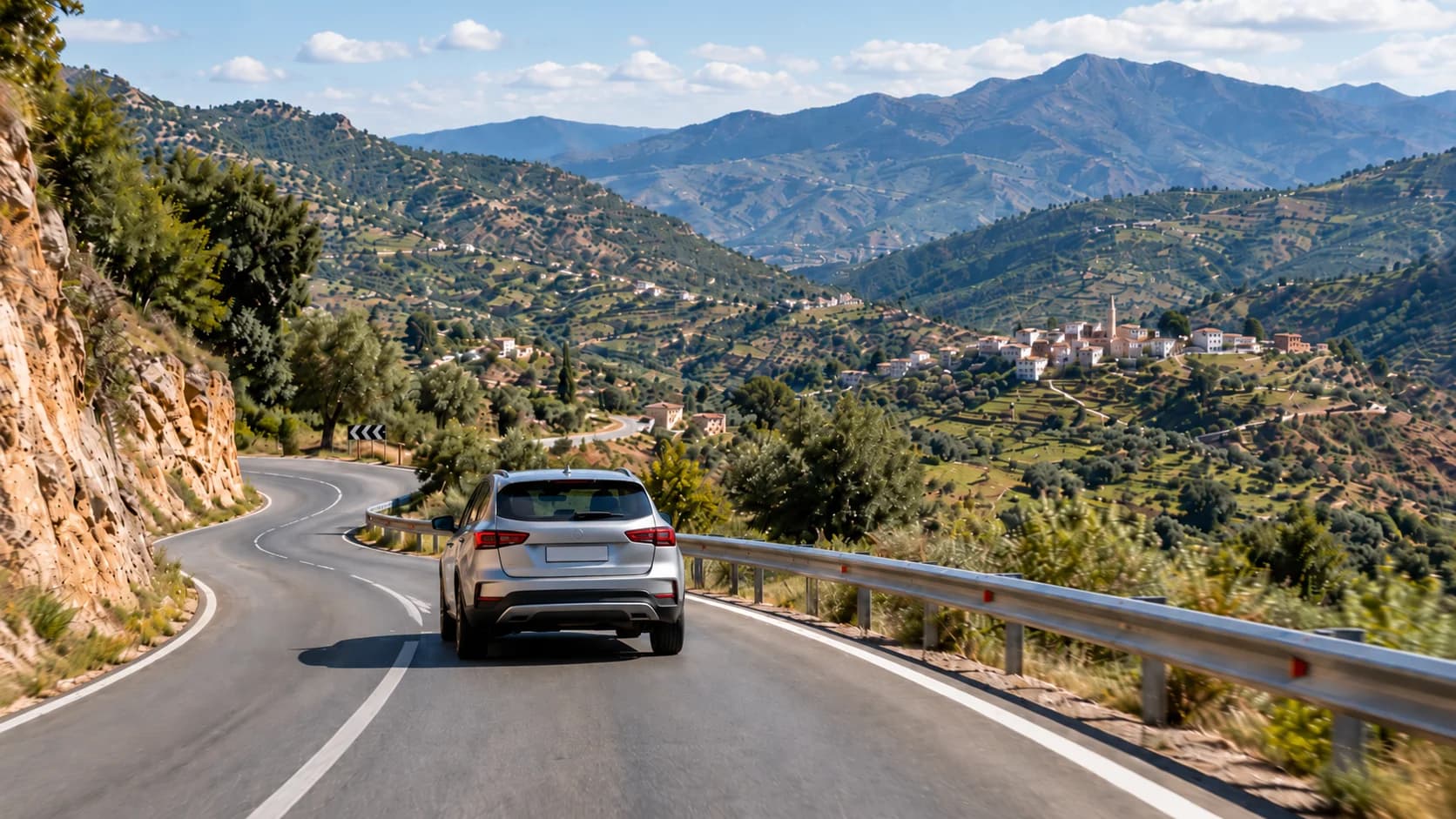
- What the Rif Mountain drive is like
- Best time of day to leave
- Where to stop for breaks
- Sedan, SUV or 4x4?
- Weather and seasonal considerations
- Mountain-route driving checklist
- Frequently asked questions
What Should You Expect Driving from Fes to Al Hoceima?
Fes to Al Hoceima by car is a scenic intercity drive that becomes progressively more mountainous as you travel north toward the Rif. The route is normally suitable for ordinary passenger cars, including sedans, but it requires more attention than a motorway journey because of bends, elevation changes, villages and potentially slower vehicles.
A navigation app may show slightly more than four hours of driving. However, tourists should generally plan around five hours or more door to door, especially when including a break or traveling during busier or less favorable conditions.
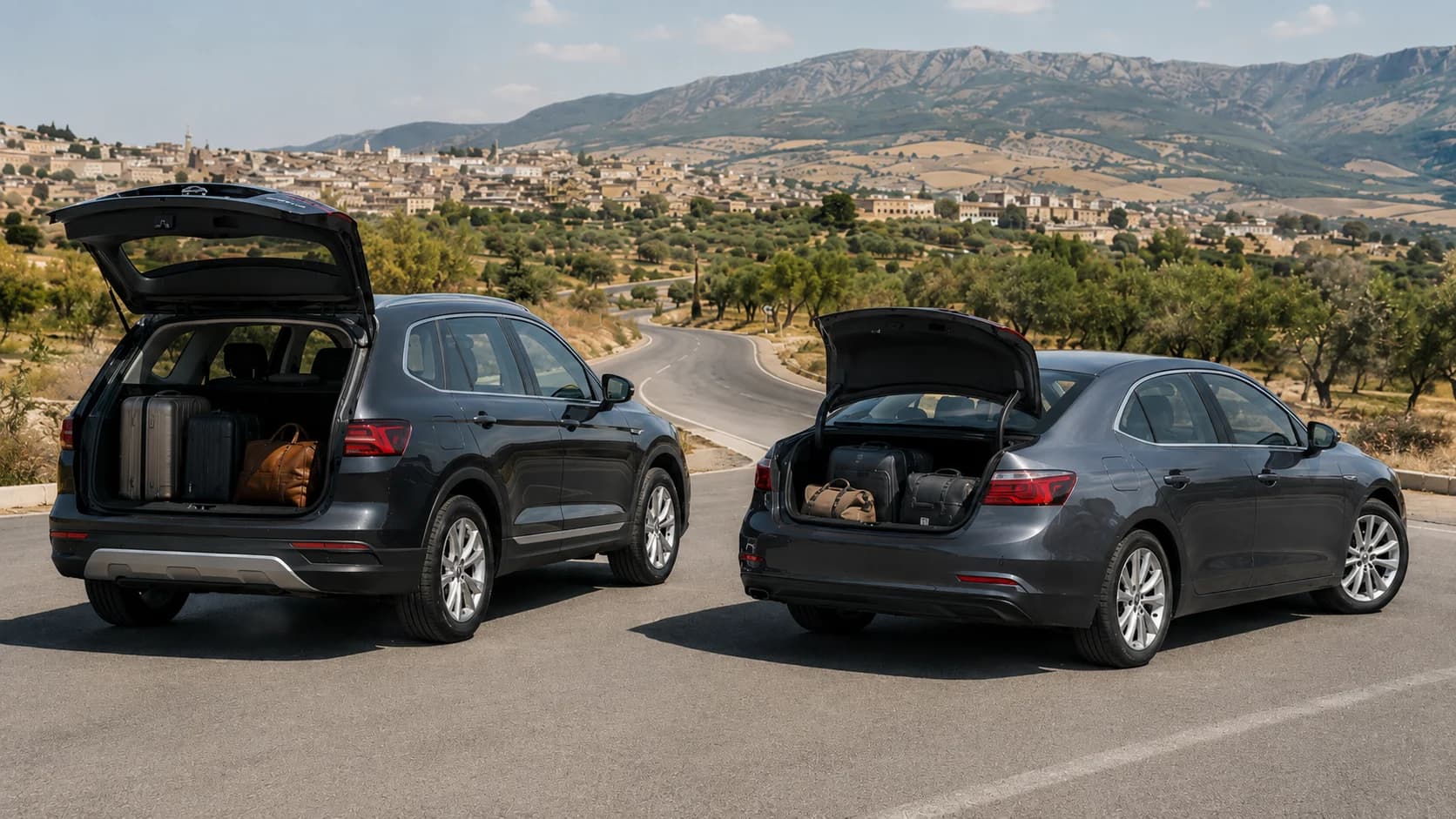
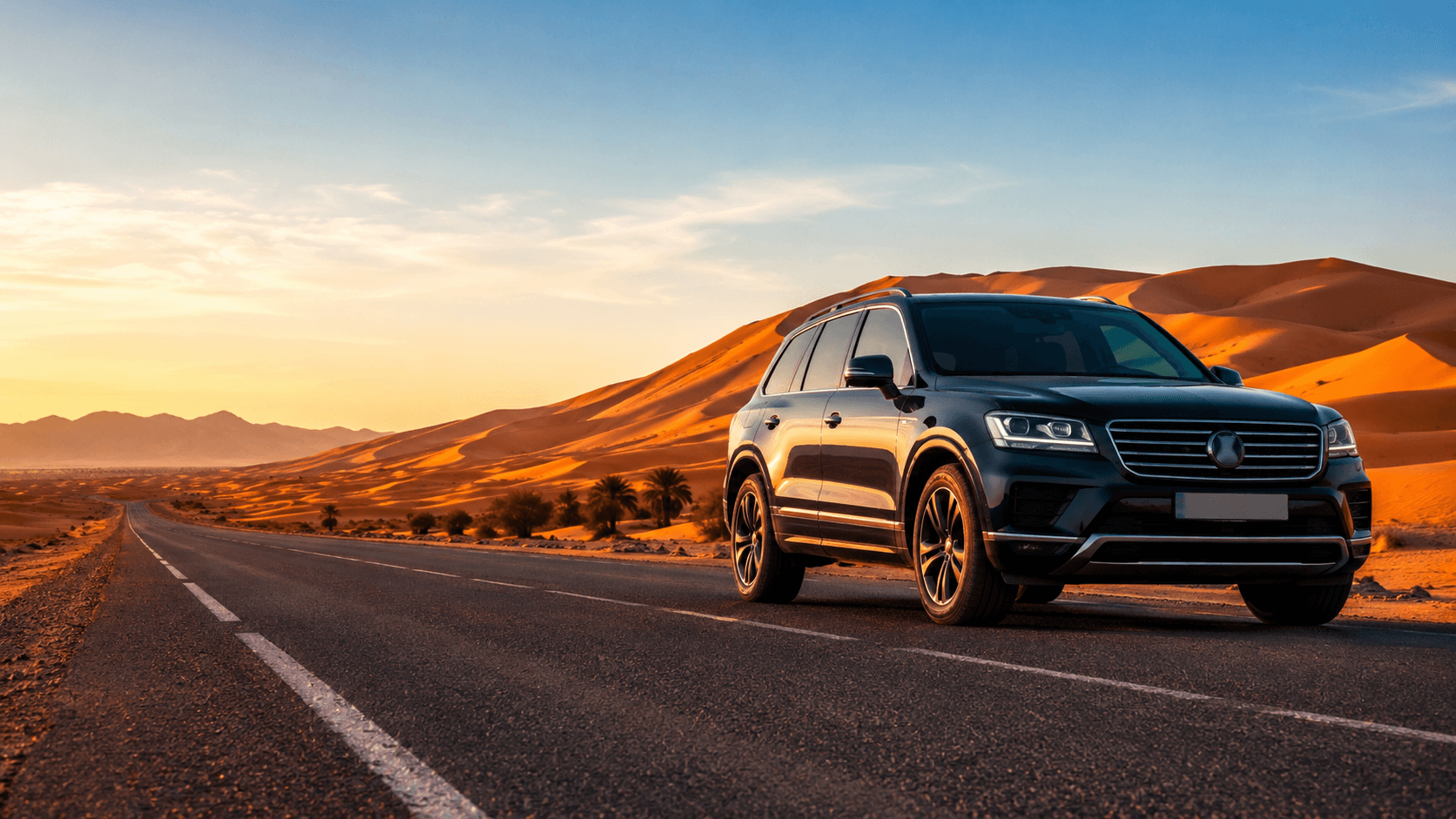
An SUV can provide extra seating comfort, luggage space and a slightly higher driving position, but a 4x4 is not automatically necessary simply because you are traveling to Al Hoceima. A normal well-maintained sedan is suitable for standard paved-road travel in normal conditions.
The most important choice is often not the vehicle category but when you leave. Starting early enough to complete most of the mountainous portion in daylight makes the trip easier and more enjoyable.
Fes to Al Hoceima: Route Overview
The journey north from Fes takes you away from the flatter approaches around the city and toward the hills and mountains associated with northern Morocco.
Unlike the long motorway corridors connecting cities such as Casablanca, Rabat and Marrakech, the Fes to Al Hoceima road requires more active driving. Road widths, curves, gradients and surrounding landscapes change throughout the journey.
This is precisely what makes the route attractive as a road trip.
You move through a more rural side of Morocco, where small communities, agricultural landscapes and mountain scenery gradually replace the larger urban environment of Fes.
What changes as you travel north?
Drivers should expect the route to feel different in stages.
Closer to Fes, driving is generally more straightforward. As you progress toward the Rif region, you should expect:
-
more curves and bends;
-
changes in elevation;
-
sections where overtaking opportunities are limited;
-
slower buses or trucks;
-
villages and roadside activity;
-
occasional roadworks or maintenance;
-
stronger weather exposure in mountain areas.
That does not make the route inherently difficult. It simply means that a distance of around 250 km cannot be treated like 250 km of motorway.
This distinction is important when planning arrival times.
Distance and Realistic Fes–Al Hoceima Driving Time
Current route calculations commonly place the journey at approximately 240–270 km, with pure driving estimates near 4 hours 15 minutes.
But there are two different numbers travelers should understand:
Navigation time is the theoretical time spent moving.
Realistic travel time includes fuel, toilet stops, coffee, slower vehicles, roadworks, village traffic and pauses after demanding sections.
How much time should you actually allow?
A useful planning window is:
| Journey style | Approximate planning time |
|---|---|
| Minimal stops | 4.5–5 hours |
| Comfortable tourist journey | 5–5.5 hours |
| Scenic trip with several stops | 5.5–6+ hours |
These are planning ranges rather than guaranteed journey times.
Conditions can change, particularly in mountain areas.
Why can the trip take longer than the map suggests?
The biggest reason is road character.
On a motorway, maintaining a relatively consistent speed is possible for long periods. On a mountain route, your average speed naturally drops when you encounter:
-
successive bends;
-
steep gradients;
-
villages;
-
trucks;
-
cyclists or pedestrians near settlements;
-
temporary roadworks;
-
wet surfaces;
-
fog;
-
short sections where passing is not appropriate.
Trying to recover lost time by driving aggressively through mountain sections is a poor strategy.
Instead, build that extra time into the schedule before leaving Fes.
What Is the Rif Mountain Drive Like?
The Rif mountain drive in Morocco can be one of the highlights of the journey.
The landscape becomes more dramatic as the route approaches northern Morocco, but the driving also becomes more involved.
Curves and elevation changes
Expect repeated bends rather than continuous straight roads.
You may climb gradually for a period, descend into another area, then begin climbing again. This means your attention should remain on the road rather than on the navigation application's estimated arrival time.
Reduce speed before bends rather than braking heavily while already inside them.
On descents, maintain a controlled speed and avoid following the vehicle ahead too closely.
Expect changing average speeds
One section may allow comfortable progress before the next becomes noticeably slower.
This is normal.
A driver unfamiliar with Morocco may look at the remaining distance and assume the journey should be finished quickly. In mountainous terrain, remaining kilometers do not always translate neatly into remaining minutes.
Local traffic
You can encounter drivers who know the route much better than you do.
Do not feel pressured to match their speed.
A local driver who travels the same road regularly may anticipate bends and road characteristics that are completely unfamiliar to a visitor.
Drive according to:
-
posted signs;
-
visible road conditions;
-
weather;
-
traffic;
-
your own visibility;
-
your level of confidence.
If another vehicle wants to travel faster, allow it to pass when there is a safe opportunity rather than accelerating unnecessarily.
Best Time of Day to Leave Fes
For most tourists, morning is the best time to leave Fes for Al Hoceima.
An approximate departure between 8:00 and 10:00 gives you plenty of flexibility while making it easier to reach the more demanding sections in daylight.
Earlier departures can be particularly useful in winter when daylight hours are shorter.
Why daylight matters
Mountain roads are easier to read when you can clearly see:
-
upcoming bends;
-
changes in gradient;
-
road edges;
-
pedestrians;
-
animals;
-
parked vehicles;
-
roadworks;
-
surface damage.
The route is not automatically unsafe after sunset, but a first-time visitor has little reason to deliberately schedule the most unfamiliar part of the journey for darkness.
Do not plan around the absolute minimum driving time
Suppose navigation shows an arrival four hours and 15 minutes after departure.
Do not schedule something important exactly four hours and 30 minutes later.
Leave margin.
A lunch stop, slower truck, road maintenance or simply wanting to stop for a photograph can easily add time.
A road trip becomes far more enjoyable when every delay does not feel like a problem.
Where to Stop Between Fes and Al Hoceima
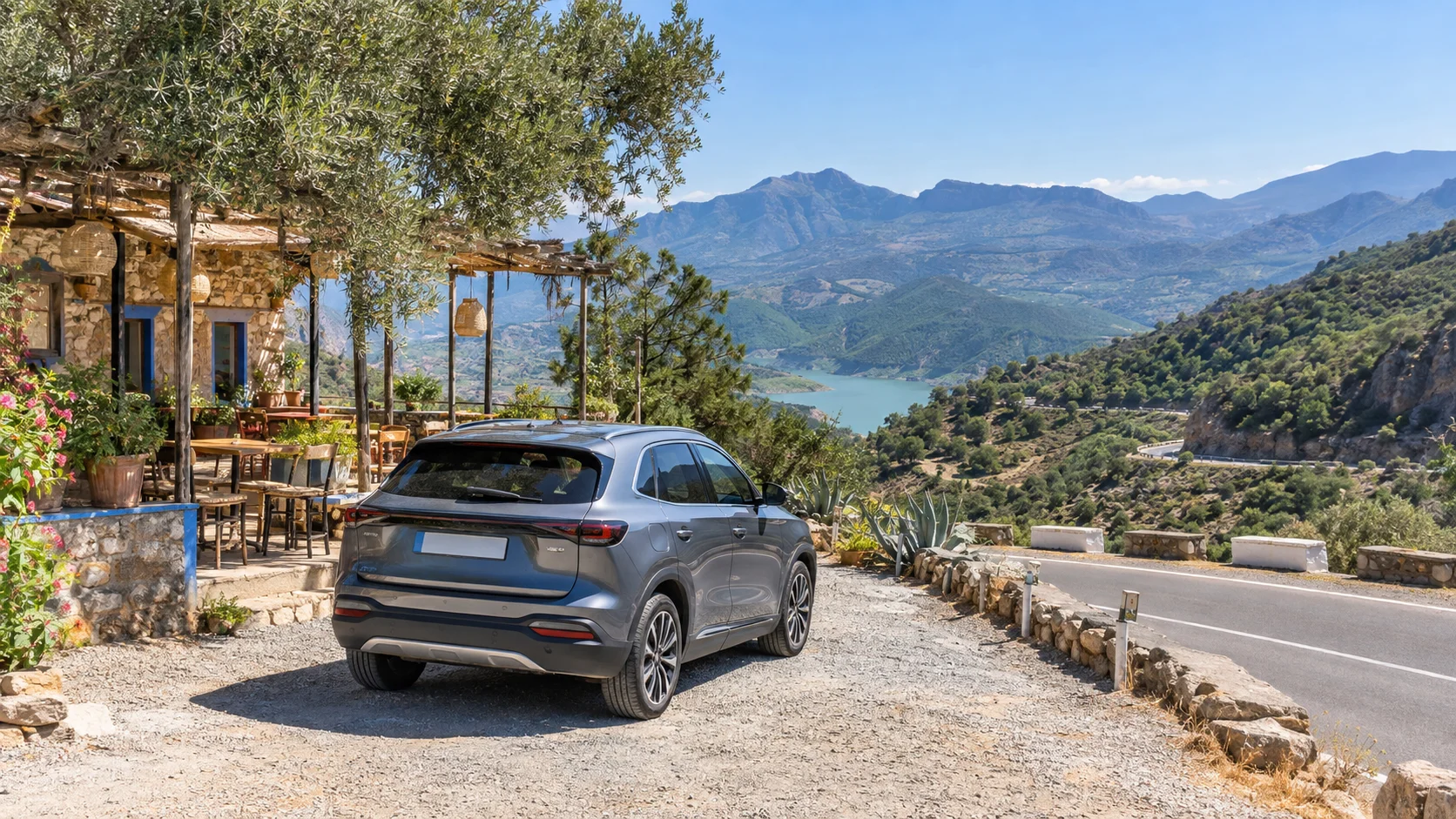
Rest stops are especially useful on winding routes.
You do not necessarily need many long breaks, but stopping once or twice can significantly reduce driver fatigue.
Plan your first stop before you are tired
A common mistake is waiting until fatigue becomes noticeable.
Instead, consider stopping after roughly 90 minutes to two hours, depending on traffic and how demanding the road feels.
A short break allows you to:
-
stretch;
-
use the bathroom;
-
buy water;
-
drink coffee;
-
check your route;
-
switch drivers if your rental agreement allows another authorized driver.
Taounate area
Depending on the exact route chosen by your navigation system, the wider Taounate area can provide a useful point for a break before continuing deeper into the northern mountain region.
It is also a good point to reconsider timing and conditions before proceeding.
Targuist area
Targuist is another useful reference point closer to Al Hoceima.
If you have already been driving for several hours, stopping before the final part of the journey can make the arrival considerably more comfortable.
Fuel strategy
There is little advantage in beginning a mountain route with a nearly empty tank.
Fuel before leaving Fes or refill while passing through a larger town rather than waiting until your fuel level becomes urgent.
The same applies to water and snacks.
Mountain-road planning is easier when basic necessities are already taken care of.
Sedan, SUV or 4x4 for Fes to Al Hoceima?
One of the most common questions is whether travelers need an SUV or 4x4 for this journey.
Sedan: suitable for most travelers
A standard sedan rental in Fes is normally sufficient for driving from Fes to Al Hoceima on the standard paved route under normal conditions.
A sedan works particularly well for:
-
one or two travelers;
-
couples;
-
small families;
-
moderate luggage;
-
travelers prioritizing fuel efficiency.
The important factors are vehicle condition, tires, brakes and driver comfort—not simply ground clearance.
SUV: useful for comfort and space
An SUV rental in Fes can be a good option if you want:
-
more luggage capacity;
-
easier seating for several adults;
-
a higher driving position;
-
more passenger comfort;
-
additional confidence on uneven sections.
For four or five passengers with luggage, an SUV can feel considerably more comfortable during a four- to five-hour mountain journey.
That does not mean an SUV is required. It is primarily a comfort and capacity choice for most tourists.
Do you need a 4x4?
Normally, no.
Simply traveling through the Rif Mountains does not mean you automatically need four-wheel drive.
A 4x4 rental in Fes makes more sense when your broader itinerary includes rougher roads, remote rural destinations or routes where road conditions specifically justify greater ground clearance or traction.
If your plan is simply:
Fes → standard paved route → Al Hoceima city
then a good sedan or SUV is generally sufficient under normal road conditions.
Avoid choosing a 4x4 solely because the word "mountain" appears in the itinerary.
Weather and Seasonal Considerations
Season can materially affect the character of the trip.
Spring
Spring can be a beautiful period for driving through northern Morocco.
Landscapes are often greener and temperatures can be pleasant, but rain can still affect visibility and road surfaces.
Leave additional braking distance when roads are wet.
Summer
Summer usually provides long daylight hours, which makes timing easier.
However, daytime heat can increase driver fatigue.
Carry water and make sure the vehicle's air conditioning is working properly before leaving Fes.
Summer traffic can also increase around Al Hoceima because the Mediterranean coast attracts more domestic and international visitors.
Autumn
Early autumn can offer comfortable driving temperatures.
As the season progresses, however, rain becomes more relevant to mountain-road planning.
Monitor conditions close to departure rather than assuming conditions will match what you experienced in Fes.
Winter
Winter requires the most flexible planning.
Northern Morocco's mountain areas can experience heavy rain, snow and temporary disruptions.
This is not merely theoretical. In February 2026, official Moroccan authorities reported road closures and damage in Al Hoceima Province following snow, flooding and landslides, including affected sections of National Road N8 and roads around the Ketama and Targuist areas.
Authorities also reported weather-related problems on N8 around Taounate during the same period, including flooding, mud and road damage.
That does not mean winter travel should automatically be avoided. It means conditions should be checked close to the departure date when significant rain or snow has been forecast.
Never rely on an old blog post to determine whether a mountain road is currently open.
Follow temporary signs and local authority instructions.
Fes to Al Hoceima Mountain-Route Driving Checklist
Before leaving Fes, use this simple checklist.
Before departure
Check the vehicle
Walk around the rental car and make sure tires appear properly inflated and there are no obvious problems.
Confirm fuel
Starting with sufficient fuel removes an unnecessary concern later.
Download or prepare navigation
Mobile coverage is generally useful, but having your route prepared in advance is sensible.
Check the weather
Pay particular attention during periods of heavy rain or winter weather.
Plan daylight
Estimate when you will reach the mountain sections rather than looking only at your final arrival time.
Secure luggage
Loose bags or objects moving around the cabin become irritating during repeated bends.
While driving
Slow down before curves
Do not enter a bend too quickly and then brake sharply.
Keep more distance
Additional space is particularly valuable on descents and wet roads.
Avoid unnecessary overtaking
Wait for clear visibility and a genuinely safe opportunity.
Take breaks
Mountain driving requires more concentration than long straight roads.
Do not chase your ETA
Being 15 or 20 minutes later than an app originally predicted is normal.
Before the final approach
If you have been driving for several hours, consider a final short break.
Arriving in Al Hoceima alert is more important than gaining ten minutes by skipping a useful rest stop.
Is Fes to Al Hoceima a Good Road Trip?
Yes.
For travelers comfortable with normal mountain driving, Fes to Al Hoceima by car offers far more variety than many motorway-based journeys in Morocco.
The value of having your own vehicle is not simply reaching Al Hoceima faster.
It also gives you the flexibility to:
-
leave Fes when you choose;
-
stop when you need a break;
-
travel with luggage without transfers;
-
enjoy the changing landscape;
-
continue exploring around Al Hoceima after arrival.
The key is to treat the journey as a mountain road trip rather than a race between two cities.
Give yourself sufficient daylight and enough time to stop.
Frequently Asked Questions
How far is Al Hoceima from Fes by car?
The road distance is roughly 240–270 km, depending on your exact starting point in Fes, destination in Al Hoceima and route selected. Current route planners commonly estimate around 240 km on one of the standard driving calculations.
How long does it take to drive from Fes to Al Hoceima?
Pure driving estimates are approximately four hours to four hours 20 minutes, but tourists should generally allow around five hours or more once fuel, food, traffic and rest breaks are included.
Is the Fes to Al Hoceima road difficult?
It is more demanding than a motorway drive because there are curves, gradients and mountainous sections. However, drivers comfortable with normal paved mountain roads should generally find it manageable when conditions are good.
Are there mountain roads between Fes and Al Hoceima?
Yes. The journey moves through northern Morocco toward the Rif region, so travelers should expect winding sections and noticeable elevation changes.
Do I need an SUV or 4x4?
Normally not. A standard sedan is generally suitable for the normal paved route. An SUV can improve space and comfort, while a 4x4 is more relevant if your broader itinerary includes genuinely rough or remote roads.
Is a sedan suitable for Fes to Al Hoceima?
Yes. A properly maintained sedan is usually perfectly suitable for the standard Fes–Al Hoceima journey under normal conditions.
Should I avoid driving from Fes to Al Hoceima at night?
For tourists unfamiliar with the route, completing the mountain sections in daylight is preferable. Visibility of bends, pedestrians, road edges and changing road conditions is naturally better during daylight.
Where can I stop between Fes and Al Hoceima?
Your exact options depend on the route, but larger communities along the journey and areas around Taounate and Targuist can provide practical places for fuel, food or a driving break.
What is the best time to leave Fes?
A morning departure—roughly 8:00 to 10:00 for most itineraries—is a comfortable choice. In winter, leaving earlier may be worthwhile because daylight hours are shorter.
Is the route suitable for first-time drivers in Morocco?
It can be, provided you are already comfortable with mountain roads and do not rush. Drive defensively, follow posted signs, leave sufficient space and avoid planning the most demanding portions after dark.
Final Advice for Driving from Fes to Al Hoceima
The Fes to Al Hoceima road trip rewards drivers who give it enough time.
Expect around four-plus hours of actual driving and plan additional time for breaks and slower mountain sections. Leave Fes in daylight, avoid building your itinerary around the absolute minimum navigation time and adjust your plans when weather conditions require it.
A sedan is suitable for most couples and small groups. An SUV can make the trip more comfortable for families, several adults or travelers carrying substantial luggage. A 4x4 should be chosen because the wider itinerary requires one—not simply because Al Hoceima lies beyond mountain terrain.
Most importantly, treat the journey itself as part of the experience.
Give the Rif route the time it deserves — leave in daylight, plan regular breaks and choose a Fes rental car suited to your passengers, luggage and comfort needs.