
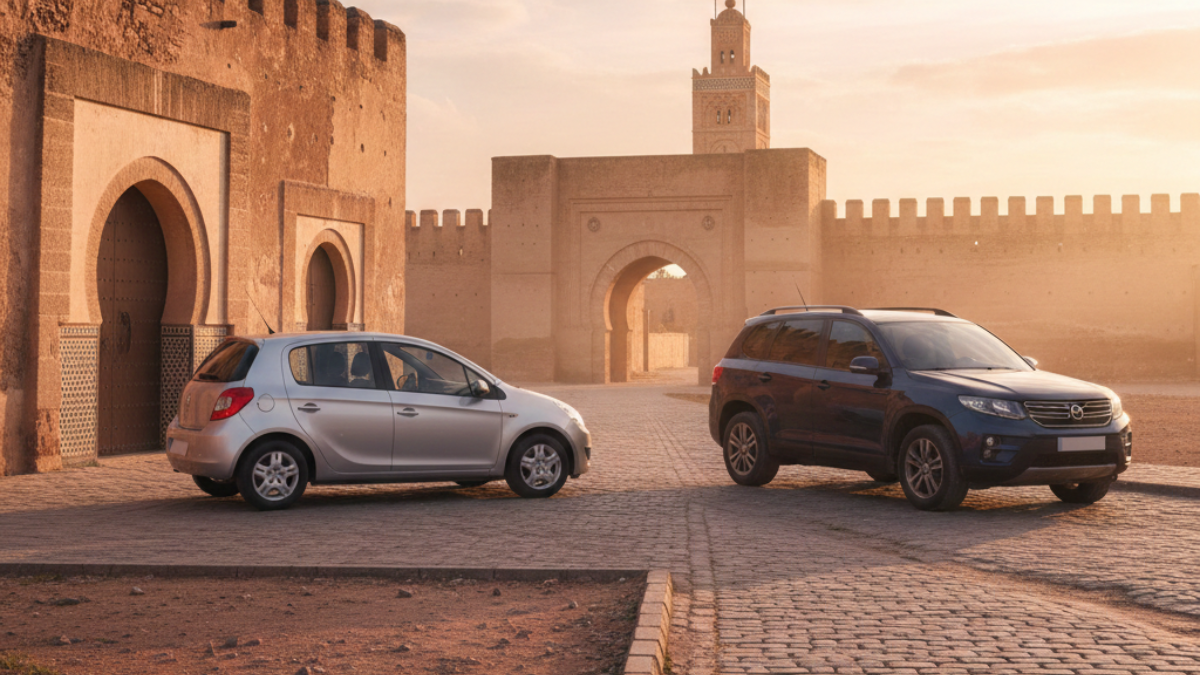
Choosing between an SUV and a small car in Fes isn’t about “which looks better”, it’s about where you’ll actually drive and park. Fes has two realities: the old medina, where streets get tight and access is limited, and the modern city + regional roads, where comfort and stability matter (especially if you’re heading toward Ifrane or Meknes).
This guide breaks it down the practical way: when a small car is the smartest option, when an SUV genuinely helps, what to expect at police checks, and how to plan mountain-road trips without stress.
Table of Contents (Checklist)
1) Quick answer: should you pick SUV or small car in Fes?
2) Medina parking: why size matters more than power
3) City driving in Fes: traffic, speed control, and comfort
4) Police checks: what they ask for (and how to pass fast)
5) Mountain roads: Fes → Ifrane / Middle Atlas (SUV vs small)
6) Day trip logic: Fes → Meknes (do you need an SUV?)
7) Decision checklist (pick your car in 30 seconds)
FAQ
1) Quick answer: should you pick SUV or small car in Fes?
Pick a small car if you:
want the easiest parking near medina gates
plan to stay mostly inside Fes (hotel, restaurants, short drives)
travel light (1–2 suitcases)
want the best fuel efficiency and least “maneuver stress”
Pick an SUV if you:
have 3–5 travelers and real luggage
plan multiple day trips (Ifrane, Azrou forests, longer countryside routes)
want higher seating, smoother ride, and better comfort on imperfect surfaces
travel in winter months where mountain weather can change fast
A simple rule: Medina-focused trip = small car wins. Region-heavy trip = SUV starts to pay for itself.
2) Medina parking: why size matters more than power
Fes’ medina is world-famous, and famously not designed for modern cars. Even if you’re not driving into the medina, you’ll often park near main access points and walk in.
Why small cars win near the medina
Easier to slip into tighter spaces near busy gates
Less stress in narrow lanes around drop zones
Faster pick-ups and drop-offs when traffic is dense
Lower risk of scratches in tight maneuvers
When an SUV makes medina days harder
Larger turning circle
Harder parallel parking
More time searching for a “comfortable” spot
More stress in stop-and-go congestion
If your plan is: riad → medina exploring → dinner → riad, a small car is usually the cleanest choice.
3) City driving in Fes: traffic, speed control, and comfort
Fes driving varies by zone:
Ville Nouvelle (modern Fes): wider roads, easier driving, standard city traffic
Medina edges / older districts: narrower lanes, more pedestrians, more stops
Comfort trade-off
Small car: easier, lighter, less tiring in tight areas
SUV: smoother ride over rough patches, better visibility, more comfort for longer days
Speed enforcement (why it matters for both)
Morocco is known for real enforcement of road rules. If you’re stopped, you may be asked to show your documents, so it helps to keep them ready (license + rental paperwork). GOV.UK also advises carrying your insurance, licence and registration documents while driving in Morocco.
4) Police checks in and around Fes: what they ask for
Police checks can happen on city roads and especially on main routes outside town. They’re usually straightforward if you’re prepared.
What to keep within reach (not buried in luggage)
Driver’s license
Passport or ID (often requested)
Rental contract / hire documents
Vehicle papers + insurance proof (normally provided with the rental)
GOV.UK specifically notes to always carry your insurance, licence and registration documents.
How to pass checks quickly (VIP-simple)
Slow down early, stay calm
Keep hands visible, be polite
Present documents cleanly (one folder is perfect)
Don’t argue on the roadside, ask for clarity and stay respectful
5) Mountain roads: Fes → Ifrane (and why the car choice changes)
The road toward Ifrane and the Middle Atlas is where many travelers start wishing they’d chosen comfort over “small and cheap.”
When an SUV helps on mountain routes
Stability and confidence on changing surfaces
Higher clearance (useful on rough edges or uneven shoulders)
Better comfort for passengers on longer drives
More luggage flexibility (winter coats, bags, family gear)
When a small car is still perfectly fine
You drive in daylight
Weather is clear
You keep speeds conservative and avoid risky overtakes
You don’t overload the car with luggage/people
Important: GOV.UK warns that poor lighting makes night driving dangerous, and that secondary routes and mountain roads can be especially hazardous in poor weather.
So if your plan includes Ifrane, the “best upgrade” is often not horsepower — it’s comfort + stability + safe timing.
6) Day trip logic: Fes → Meknes (do you need an SUV?)
For Fes ↔ Meknes, most travelers do not need an SUV.
Choose a small car if:
it’s a simple out-and-back day
you’re 1–3 people with light luggage
you want easier parking once you arrive
Choose an SUV if:
you’re stacking stops (Meknes + additional countryside sites)
you’re 4–5 adults and need space
you want that “executive comfort” feel for a full-day schedule
Toll-road tip (if your route uses highways)
If you end up on toll roads, Morocco’s highway operator explains that Jawaz lets you pass through toll stations without stopping, using dedicated lanes. Here’s the official page: ADM – Le Pass Jawaz
7) Decision checklist: pick your car in 30 seconds
Choose SMALL CAR if most answers are “yes”:
Mostly Fes city driving
Medina access days (park + walk)
1–3 travelers
Light luggage
Lowest stress parking matters
Choose SUV if most answers are “yes”:
4–5 travelers
Big luggage / family gear
Multiple day trips (Ifrane, Middle Atlas)
Comfort and visibility are priorities
Winter travel or uncertain weather plans
FAQ
Is an SUV better for Fes medina?
Usually no. A small car is easier to park and maneuver near medina access points.
Are police checks common around Fes?
They can happen. Keep your license, rental contract, and vehicle/insurance papers ready.
Do I need an SUV to go to Ifrane?
Not always, but it helps for comfort and stability, especially in winter or bad weather.
Is a small car safe on mountain roads?
Yes if driven responsibly in good conditions and daylight. Avoid night driving in rural/mountain areas when possible.
Which is cheaper overall: SUV or small car?
Small cars usually win on fuel and rental price. SUVs win on comfort and space (which can “save” the day on long routes).
What’s the biggest mistake travelers make in Fes?
Choosing a large vehicle for a medina-heavy itinerary, then spending time and energy hunting parking instead of enjoying the city.
 Same prices and offers