
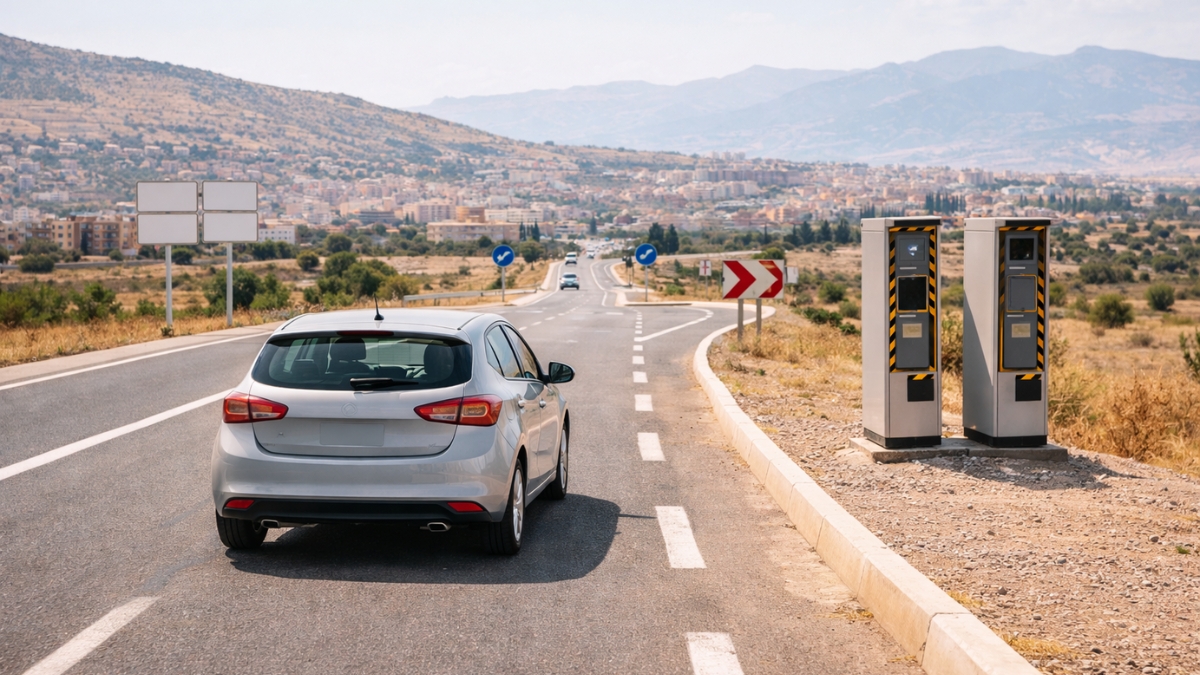
Driving in Fes is usually calm once you’re out of the tight medina streets and into the main boulevards and national roads. But if you’re self-driving (especially in a rental), speed enforcement is one of the few things that can “surprise” visitors, because the change from open road → town/village limit can happen fast, and cameras often sit where drivers forget to slow down.
Important note: I’m not going to list exact camera coordinates (that encourages unsafe driving). Instead, you’ll get the real patterns, the types of places cameras appear around Fes, the limits that catch people, and how fines are typically handled.
Table of Contents
What “speed camera” means in Morocco around Fes
Where cameras are usually placed around Fes (real-world patterns)
Typical speed limits you’ll see near Fes
The “two-way” radar change (why more drivers get fined now)
Mobile controls vs fixed cameras: what’s different
How fines are handled (locals vs tourists vs rentals)
How to check and pay a fine online
A practical “don’t get caught out” driving routine
1) What “speed camera” means in Morocco around Fes
Around Fes you can run into two main types of speed enforcement:
Fixed automated radars (permanent units, often near transitions: city limits, villages, long straights)
Mobile controls (police checks with handheld radar or temporary setups, often on national roads and at town entrances)
The driving mindset that works best is simple: treat every town/village entry as a speed-change zone, even if the road still looks like open highway.
2) Where cameras are usually placed around Fes (real-world patterns)
You won’t spot every camera in advance, so use patterns instead. Around Fes, fixed radars and speed checks commonly appear in:
A) City-entry / city-exit transitions
These are the classic “I was still cruising” moments:
Where fast approach roads feed into urban boulevards
Just after you pass a “city name” sign and the environment starts looking more built-up
Near long straight segments that feel safe but are still inside an enforced zone
B) Village corridors on national roads
The Fes region has plenty of stretches where you pass through small towns that line the road. That’s where enforcement makes sense: pedestrians, scooters, roadside stalls, and turning traffic.
C) Downhill straights and gentle curves
If a road drops downhill into a flatter straight, drivers unintentionally gain speed. Those “easy” segments are frequent enforcement picks, especially right before or after a settlement.
D) Major junction approaches and roundabouts
Before big roundabouts or junctions, drivers brake late. Enforcement around these zones encourages early slowing (and catches those who don’t).
E) High-traffic commuter roads around the metro area
Where daily commuters move fast and consistently, fixed radar is more likely than in tiny side streets.
The takeaway: if you only slow down “when you see a camera,” you’ll lose. If you slow down at settlement entries and junction approaches, you’ll be fine.
3) Typical speed limits you’ll see near Fes
Morocco’s limits vary by road type and signage, but the most common reference points are:
Urban/agglomeration: often 60 km/h, and sometimes 40 km/h in dense central zones or near sensitive areas.
Outside towns / national roads: commonly around 100 km/h where posted and conditions allow.
Autoroute (highway): commonly 120 km/h where posted.
Two practical truths that matter more than memorizing numbers:
Signs win. If signage says 60 or 40, that’s the rule for that segment.
The most expensive “mistake” is not speeding on an autoroute, it’s entering a town still doing open-road speed.
4) The “two-way” radar change
One reason more drivers started getting surprised in 2025 is a change in how some fixed automated radars monitor traffic. Morocco’s road safety agency announced that automated radars can detect violations in both directions (approaching and moving away), starting mid-June 2025.
What that means in real life: you can’t assume “it’s only watching the other side.” If you see a fixed radar unit, drive as if it applies to your direction too.
5) Mobile controls vs fixed cameras
Fixed cameras tend to be consistent: same places, same logic (transitions, straights, junctions).
Mobile checks can appear anywhere, but they also follow patterns:
Town entrances (where drivers forget to slow down)
Busy national road segments
After a long open stretch where speed drift happens
The key difference is what happens next:
With mobile checks, you may be stopped and informed immediately.
With fixed radar, you might not know until later (especially in a rental).
6) How fines are handled (locals vs tourists vs rentals)
If you’re stopped in person
You’ll be told the infraction and what to do next (payment process depends on the situation and enforcement type). Always stay polite, keep documents ready, and avoid arguing roadside.
If the infraction is captured by fixed radar
The process can move electronically through official systems. Morocco provides official online services related to fixed-radar traffic fines through the Ministry of Justice platform.
If you’re driving a rental car
This is where people get confused:
The car is registered to the rental company, so notifications may reach them first.
Many rental companies will either:
charge your card later for the fine (and sometimes an admin handling fee), or
contact you and request settlement via the official method, depending on their policy.
Your best protection: ask at pickup, “How do you handle fines captured by cameras?” and keep your contract/WhatsApp thread. This avoids surprises weeks later.
7) How to check and pay a fine online
For fixed radar-related cases, Morocco’s official online services include:
The Ministry of Justice e-payment platform for traffic fines related to fixed radar, where you can search using details like the report number (from the notice).
NARSA also provides channels and guidance for traffic offenses and payment methods (including online options).
There is also an official “Traffic Offenses / Infractions Routières” app listing that notes consultation services (including recorded offenses).
Two authoritative, non-travel, non-competitor links you can keep bookmarked:
official Ministry of Justice fine payment portal
official NARSA road safety page on speeding
8) A practical “don’t get caught out” driving routine
Use this routine around Fes and you’ll avoid almost all speed surprises:
At every town/village sign: drop speed early (don’t wait for the first building).
After a downhill: glance at your speed, gravity is sneaky.
Before roundabouts/junctions: reduce speed sooner than you think.
Match the posted sign, not traffic flow: locals may know the road; you don’t.
If you’re unsure whether you’re in a 60 zone: drive like you are until a sign tells you otherwise.
quick answers:
Do speed cameras exist around Fes? Yes, both fixed and mobile enforcement can occur around the city and on approach roads.
What limit catches people most? The drop from open-road speed to town limits (often 60 or 40).
Can you pay fixed-radar fines online? Yes, via official portals.
 Same prices and offers