
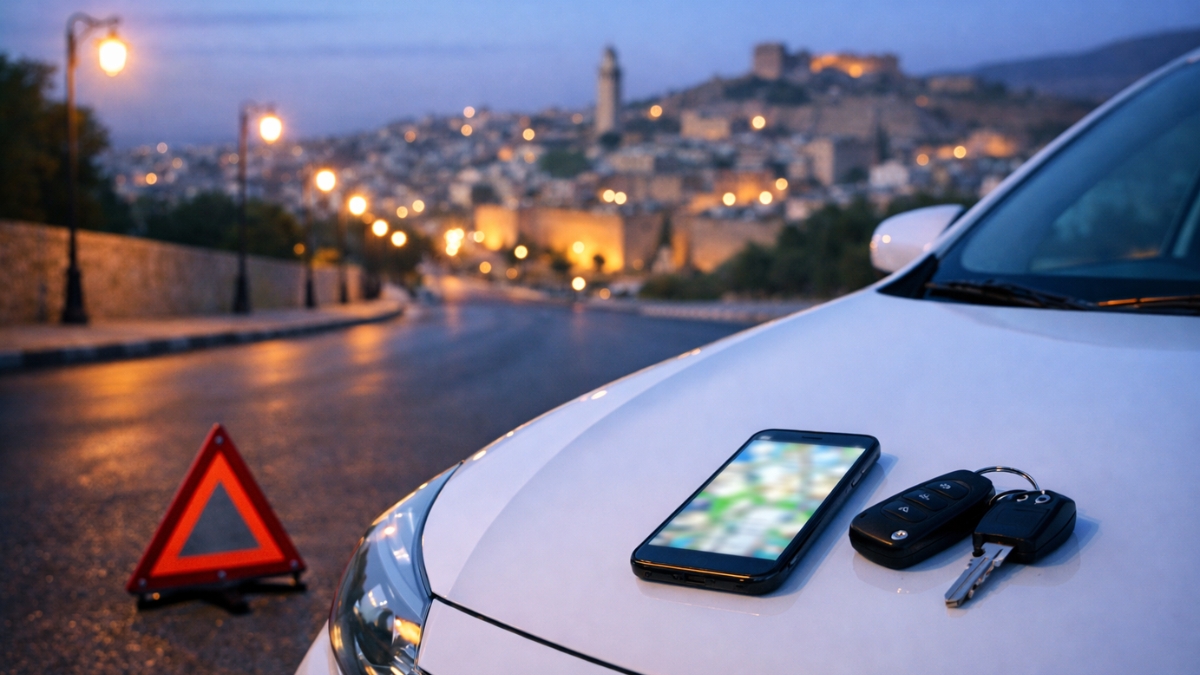
When you rent a car in Fes, the biggest difference isn’t the model, it’s what happens when something unexpected pops up: a warning light, a flat tire, a late-night question, or a minor bump in a tight street. That’s why MarHire Car Fes is built around a support system that stays practical: local agents who know the city, a clear replacement process, and help you can reach any time.
This guide explains how the support actually works, what you should do first in each situation, and how to get the fastest outcome with the least stress.
Table of contents
What “support system” means in real life
Local agents in Fes: why it matters
The 24/7 help flow: how to get assistance fast
Replacements: how the swap process works
Breakdowns, tires, and warning lights: what to do
Minor accidents: photos, reports, and next steps
Common delays and how to avoid them
Quick FAQs
1) What “support system” means in real life
Support isn’t a slogan. It’s a set of simple rules that keep your trip moving:
One contact channel that actually answers (no bouncing between numbers)
Local decision-making (an agent who can act, not “ask headquarters”)
Clear triage: is it safe to drive, do we send help, or do we replace the car?
Replacement readiness for cases that can’t be solved quickly on the spot
In Fes, this matters more than in wide-open cities because driving can involve medina edges, narrow access roads, steep ramps, and busy roundabouts, small issues can feel bigger if help is slow.
2) Local agents in Fes: why it matters
A local agent isn’t just someone who hands over keys. It means you’re dealing with a person who understands:
The difference between Fes el-Bali, Fes Jdid, and Ville Nouvelle
Where cars can pause briefly and where stopping creates immediate problems
Typical “pain points” (tight parking, curb scrapes, tricky one-way streets)
The fastest routes to reach you at the airport, a hotel, or a main road exit
This local knowledge reduces guesswork. Instead of long explanations, you can share your location and get a direct answer: drive to a safe pull-off, wait where you are, or meet at a nearby landmark that’s easy for both sides.
3) The 24/7 help flow: how to get assistance fast
When you contact MarHire Car Fes, the fastest help usually comes from doing the first 60 seconds correctly.
Step 1: Move to a safe spot (if you can)
If the car is drivable and you’re not in immediate danger:
Signal early, slow down, and pull into a safe shoulder or open area
Turn on hazard lights
Keep passengers away from traffic
If you’re not sure whether it’s safe to keep driving (strange noise, overheating smell, severe vibration), stop and contact support.
Step 2: Send location + a quick description
To avoid back-and-forth, send:
Your live location or a dropped pin
A photo of the dashboard warning (if any)
One line describing what happened: “warning light came on,” “tire losing air,” “battery seems weak,” etc.
Most travelers use WhatsApp for this because it’s fast for photos and live location, if you’ve never used those features, the official WhatsApp’s Help Center explains how sharing location works on your phone.
Step 3: Support triage (what happens on our side)
MarHire Car Fes will typically decide between:
Remote guidance (small fix, normal warning, how to proceed safely)
On-road help (tire change support, battery assistance, quick inspection)
Replacement (when the car shouldn’t continue or the fix won’t be quick)
Step 4: You get a clear plan with timing
Good support isn’t only “we’ll help.” It’s:
where to wait
what to prepare (documents/photos)
what the next 30–60 minutes look like
If you need help sharing a precise pin from navigation, Google Maps Help on sharing location is a reliable reference.
4) Replacements: how the swap process works
Sometimes a replacement is simply the best solution, even if the problem is minor, because it protects your schedule and removes uncertainty.
When a replacement is typically recommended
A dashboard warning that suggests a mechanical issue
A tire problem that can’t be solved quickly
A battery/charging issue that repeats
Any situation where you feel unsafe continuing
What you’ll need for a quick replacement
To speed things up, prepare:
A few photos of the car (front, rear, both sides)
The mileage and fuel level (a quick phone photo is fine)
A short voice note explaining what happened (optional but fast)
How the handover usually happens
MarHire Car Fes aims to keep the swap simple:
A safe meeting point is agreed (airport curbside, hotel entrance, main road pull-off)
The agent checks the car condition quickly
You sign a short confirmation and continue with the replacement vehicle
The goal is not to “debate what happened.” The goal is to keep your trip moving and sort details calmly.
5) Breakdowns, tires, and warning lights: what to do
Here’s a practical cheat sheet for common issues:
Tire losing air
Don’t push speed, slow down and pull over safely
Send location + photo of the tire
If you have luggage, don’t unload it on the roadside unless asked
Battery seems weak (slow start)
Avoid turning the engine on/off repeatedly
Turn off unnecessary electrics (AC, chargers)
Contact support before you get stuck in a tight parking spot
Warning light appears
Take a clear photo of the dashboard
Tell support if the car feels normal or if power/braking changed
If the engine temperature rises, stop and call immediately
Even if you’re not a “car person,” you don’t need to diagnose anything. Your job is simply to describe what you see and share location, support will handle the decision.
6) Minor accidents: photos, reports, and next steps
In a minor scrape or bump, the priority is calm documentation.
Do this first
Move to a safe place if the car can roll safely
Take wide photos: both vehicles, street context, and close-ups of damage
Share the photos with support immediately
Keep it simple
Avoid long arguments on the street. Your support agent will guide you on:
what information to exchange
whether an official report is needed
whether you should keep driving or switch vehicles
The faster you document clearly, the faster everything gets resolved.
7) Common delays and how to avoid them
Most slowdowns come from preventable gaps. Here’s what helps:
Don’t send “Help” with no details. Always send location + one-line issue.
Don’t wait until the car becomes undrivable. If you sense a problem, message early.
Don’t park deep inside tight alleys if you’re unsure. Choose open, accessible spots.
Don’t ignore fuel and warning signals on long day trips. A quick check beats a late surprise.
8) Quick FAQs
Is support really available at night?
Yes, 24/7 means you can reach help even for late arrivals, early departures, or unexpected issues.
Will you replace the car if something feels unsafe?
If continuing isn’t the smart option, replacement is the cleanest solution to protect your schedule.
What should I send first when I contact support?
Live location (or a pin), a photo of any warning light/damage, and one short line describing the issue.
Do I need to be a mechanic to explain the problem?
No. Just describe what you see/hear and whether the car still drives normally.
What if I’m in a confusing area near the medina?
Share live location and a nearby landmark (gate name, big roundabout, known hotel) so an agent can guide pickup.
Will small issues always become big problems?
Not at all. Many are solved quickly, what matters is reporting early and following the safety steps.
 Same prices and offers