
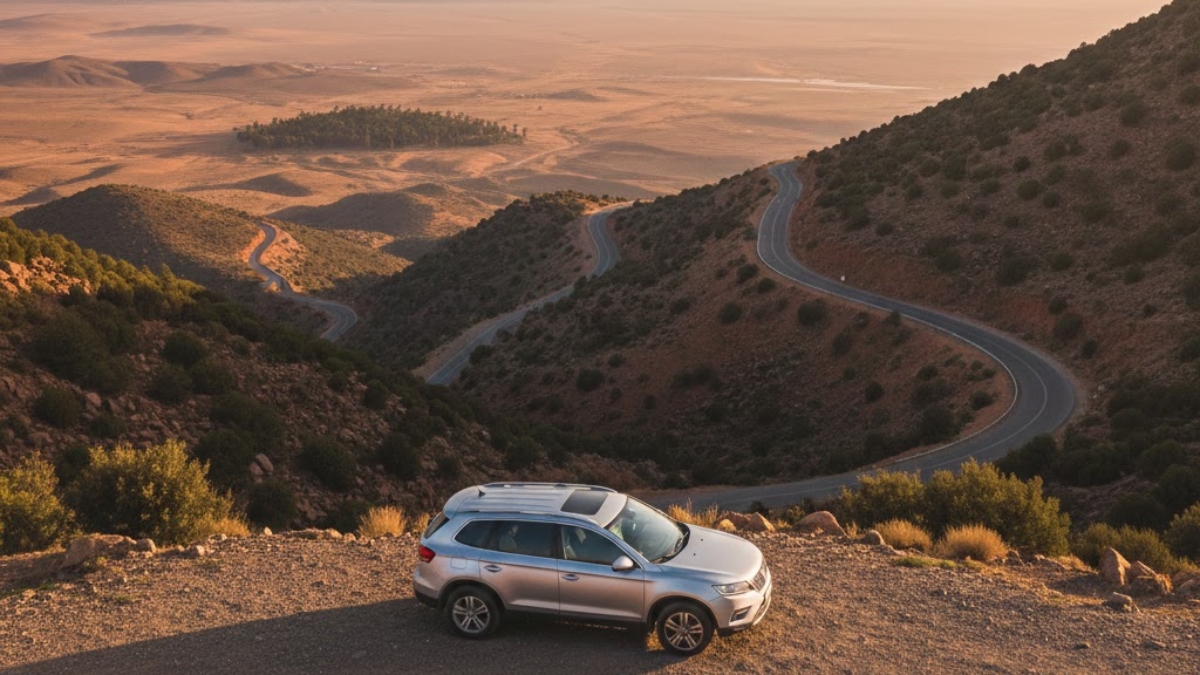
Driving from Fes to Merzouga is one of Morocco’s most rewarding rental-car routes: cedar forests and Middle Atlas scenery give way to wide valleys, palm oases, and finally the Sahara-edge landscapes around Erg Chebbi. But it’s also a long day behind the wheel, with real changes in altitude, weather, and road rhythm. This guide focuses on what matters most: road conditions, fuel planning, and the moments when hiring a driver is the smarter (and sometimes safer) choice.
Table of contents
What the drive is really like (distance, time, rhythm)
Best route options from Fes to Merzouga
Road conditions by section (Middle Atlas → desert edge)
Fuel strategy: where to fill up and what to carry
When you should take a driver instead of self-driving
Practical checklist for a smooth rental-car desert run
FAQs
What the drive is really like (distance, time, rhythm)
This trip is long enough that “Google time” and “real time” can differ. In normal conditions, plan roughly:
One-day drive (direct): around 7–9 hours of wheel time
Comfortable pace with stops (photos, lunch, breaks): 9–11 hours total travel day
Easier plan: split into 2 days with an overnight in Midelt or Errachidia
The key is pacing. You’ll start in a city, climb into mountains, cross long open roads, then finish near desert towns where it’s best to arrive before dark.
Best route options from Fes to Merzouga
Most drivers take the classic, reliable route through the Middle Atlas and the Ziz Valley:
Fes → Ifrane → Azrou → Midelt → Rich → Errachidia → Erfoud → Rissani → Merzouga
Why this route works:
It’s the most common corridor for desert access
Towns along the way make fuel and rest stops easy
You get great scenery without needing remote backroads
A shorter-looking “alternate” route sometimes appears on maps, but if you’re new to Morocco driving, stick to the well-traveled path above, especially in winter.
Road conditions by section (what to expect)
1) Fes to Ifrane: smooth roads, quick altitude change
This section is usually straightforward, with good pavement and clear signage. The big change is altitude: you’re climbing into cooler air quickly.
Watch for: early-morning fog, occasional rain, and more police speed checks around transitions between towns.
2) Ifrane / Azrou area: mountain driving + seasonal weather
This is where winter can affect your plan. In colder months, snow or icy patches can happen in the Middle Atlas, and conditions can change fast compared to Fes.
Driving style tip: stay conservative on curves and don’t rush overtakes. Even if the road looks clear, shaded sections can feel slick when it’s cold.
3) Azrou to Midelt: open stretches, trucks, and long sightlines
This part is often scenic and “easy driving,” but you’ll share the road with trucks and coaches. Passing is usually manageable when visibility is good, just be patient and avoid risky moves.
Stop idea: Midelt is a natural break point for coffee, lunch, or an overnight if you’re splitting the trip.
4) Midelt to Errachidia: longer, quieter stretches
This is where the trip starts to feel remote. The pavement is generally fine, but services can be more spaced out.
Watch for: wind, roadside animals, and long fatigue zones (you’ll feel the hours here).
5) Errachidia to Erfoud: Ziz Valley vibes, great daylight driving
This is one of the most beautiful parts of the journey, palm groves, valleys, and changing colors. Roads are typically decent, and traffic increases as you approach Erfoud.
Pro move: aim to drive this section in daylight for the views and easier navigation.
6) Erfoud / Rissani to Merzouga: desert-edge roads + “don’t drive into sand” rule
Roads into Merzouga are paved, but once you start heading toward dunes, sand tracks appear.
Important: most standard rental agreements do not want you driving onto sand tracks. If your accommodation is a desert camp, you usually park near the edge and transfer by 4×4 arranged by the camp.
Fuel strategy: where to fill up and what to carry
Fuel planning is simple if you treat it like a long-road routine:
Where to refuel (easy, low-stress plan)
Top up before leaving Fes
Refuel again around Midelt
Refuel around Errachidia or Erfoud (very common last “serious” fuel stop)
Arrive in Merzouga with plenty in the tank for local exploring (or for getting back to Erfoud/Rissani)
What fuel is like on this route
You’ll find diesel and gasoline commonly in towns
In smaller places, stations may be basic and occasionally slower
Payment is usually straightforward, but it’s smart to keep cash available in case card systems are down
What to carry (not extreme, just smart)
Water for everyone in the car (desert edge = dry air)
A phone charger + offline map backup
A small snack kit (long stretches + fewer stops)
A basic tire check mindset (pressure before you leave, quick visual checks at stops)
When you should take a driver instead of self-driving
Self-driving is totally doable for many travelers, but there are situations where a driver is the better call—especially for groups, winter trips, or first-time Morocco road-trippers.
Take a driver if any of these are true
1) You’re traveling in winter and don’t want weather surprises
Middle Atlas conditions can shift quickly. A driver who knows the route can adjust timing, choose safer pacing, and handle mountain sections calmly. For general road-travel safety guidance, you can review official Morocco travel advice here: https://www.gov.uk/foreign-travel-advice/morocco/safety-and-security
2) You’re not confident with long rural drives (7–9 hours)
This is the big one. Even experienced city drivers can get tired on long open roads. Fatigue causes most “bad decisions” (late overtakes, missed turns, pushing into night driving).
3) You plan to arrive after dark
Night driving is where stress spikes: fewer visual cues, harder-to-spot pedestrians/animals, and more fatigue. If your only feasible schedule includes a late arrival, a driver can remove a lot of risk.
4) Your group needs comfort and predictability
Families, elders, or mixed groups often prefer a driver so everyone can rest, enjoy the scenery, and keep energy for Merzouga activities instead of arriving depleted.
5) You want a desert-camp experience and don’t want to manage the “last mile”
Many camps require a 4×4 transfer anyway. A driver can coordinate handoffs smoothly so you’re not guessing where to park or which track is safe.
If you’re unsure about your own driving comfort level, Morocco’s road-safety authority is NARSA (useful for general awareness and safety messaging): https://www.narsa.ma/fr
Practical checklist for a smooth Fes → Merzouga rental-car day
Start early (ideal: morning departure)
Keep stops short and purposeful (breaks every 1.5–2.5 hours)
Avoid pushing into night driving
Refuel in Midelt and again around Errachidia/Erfoud
Don’t drive onto sand tracks with a standard rental
Confirm your Merzouga accommodation’s “meeting point” (parking vs 4×4 transfer)
FAQs
Can I do Fes to Merzouga in one day by rental car?
Yes, but it’s a long day. Expect roughly 7–9 hours of driving plus stops. Many travelers prefer splitting it into two days.
Do I need a 4×4 to drive from Fes to Merzouga?
No for the main paved route. You only need 4×4 if you plan to drive on sand tracks near the dunes (which many rentals don’t allow).
Is fuel easy to find on the way?
Yes in towns like Midelt, Errachidia, and Erfoud. Top up regularly and don’t let the tank drop too low between towns.
What’s the hardest part of the drive?
Not “difficulty,” but endurance: long hours, changing conditions, and the temptation to rush. The Middle Atlas can be tricky in winter.
When is it smarter to hire a driver?
In winter, with big groups, if you’ll arrive late, or if you’re not comfortable with long rural driving and overtaking.
 Same prices and offers