
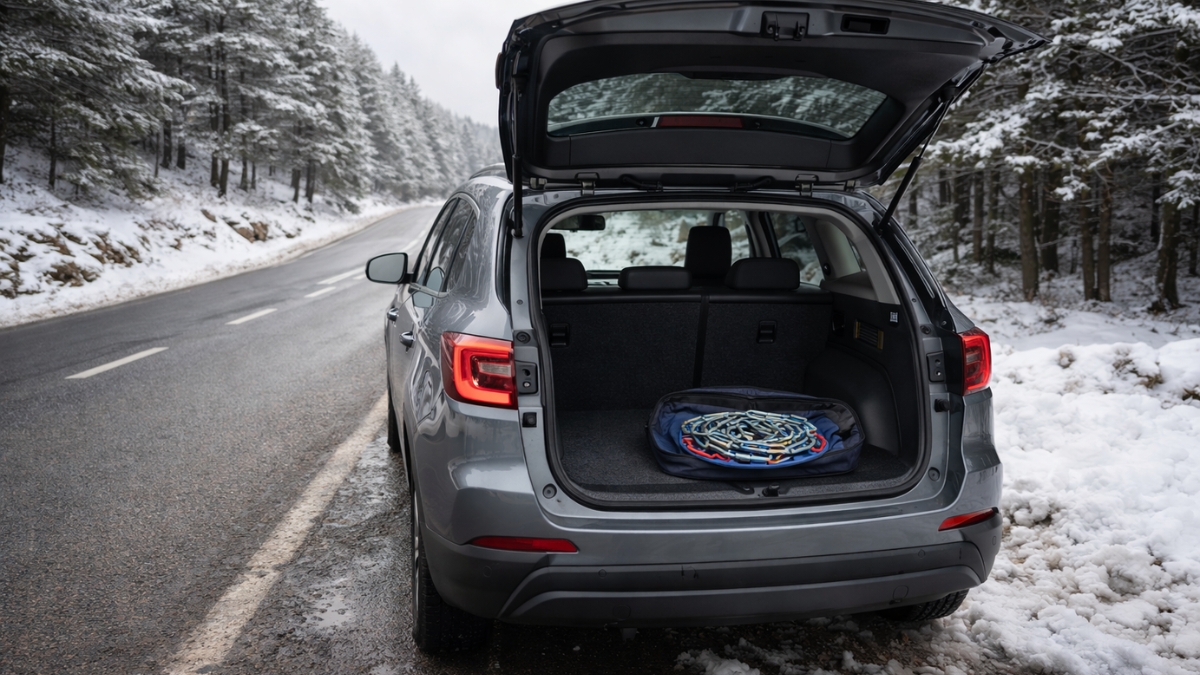
Driving from Fes to Ifrane is one of Morocco’s most rewarding short road trips, fresh mountain air, forest views, and that “alpine” feel Ifrane is known for. But in winter, the same route can switch from easy to demanding fast. One hour you’re on a dry road, the next you’re dealing with snow patches, black ice in shade, fog, or sudden temperature drops.
This guide is built for tourists: what winter conditions really look like, whether you need snow chains, which car type makes the trip safer and more comfortable, and what to do before you leave.
Table of Contents
How winter changes the Fes → Ifrane drive
The real winter risks: snow, ice, fog, wind
Do you need snow chains for Ifrane?
Best car types for winter: what to choose (and why)
What to pack and check before you leave
Safe driving tips for this specific route
Quick FAQ
1) How winter changes the Fes → Ifrane drive
Most of the year, this trip is straightforward: you leave the Fes area, climb gradually, and arrive in cooler, higher-altitude terrain. In winter, the “difference maker” is altitude + exposure:
As you climb, temperatures drop quickly, sometimes below freezing even when Fes feels mild.
Snow doesn’t have to be heavy to cause problems; thin snow + traffic = packed snow, and packed snow can become slick.
Shaded sections (trees, hills, curves) can hold ice long after sunny parts look safe.
So winter driving here isn’t about fear, it’s about preparation and timing.
2) The real winter risks: snow, ice, fog, wind
Snow (even when it’s “light”)
A light snowfall can still create:
slippery starts/stops
reduced traction on curves
braking distances that double or triple
The most dangerous situation is snow on top + wet underneath, which acts like a sliding layer.
Black ice (the quiet problem)
Black ice is hard to see and often forms:
early morning
at night
in shaded areas
near bridges or exposed ridgelines
If you see other cars “wiggle” slightly or brake lights flashing unexpectedly, assume an icy patch is near.
Fog and low visibility
Fog is common in colder mountain conditions. The risk is not only seeing less, it’s that drivers compress and brake suddenly.
Wind (especially on open sections)
Wind can push the car slightly on exposed stretches. It’s rarely dramatic, but it adds fatigue and makes steady steering important—especially for lighter vehicles.
How to check conditions before you leave
If you’re traveling in winter, check mountain alerts and weather notices (not just a general city forecast). A practical place to monitor official Moroccan weather vigilance and alerts is Vigilance Maroc Meteo.
3) Do you need snow chains for Ifrane?
Chains aren’t “always required,” but in winter they can be the difference between:
continuing safely, or
turning back (or getting stuck) on a slick section.
When chains are worth carrying
Carry chains if:
you’re traveling in December to February (especially after storms)
you plan early morning or evening drives
you’re not comfortable turning back if conditions change
you’re in a 2WD car and you want a safety backup
When chains are most likely needed
Chains become relevant when:
snow is actively falling or has fallen recently
the road has packed snow (not just wet)
you see cars moving slowly and carefully on inclines
traction is clearly limited (spinning wheels, cautious starts)
The big misunderstanding: “I have an SUV, so I’m fine”
SUV does not automatically mean:
AWD/4WD
winter tires
enough traction on ice
A 2WD SUV on summer tires can still slide. And even AWD vehicles can struggle on ice without the right tires and driving style.
How to choose and use chains correctly
If you’ve never used chains, don’t wait until you’re freezing on the roadside. Learn the basics beforehand, how to fit them, when to install them, and how to drive with them safely. This guide is clear and beginner-friendly: How to Install and Drive with Snow Chains and Tire Cables.
4) Best car types for winter: what to choose (and why)
Here’s the practical ranking for tourists driving Fes → Ifrane in winter.
Best balance for most travelers: Compact SUV / Crossover (preferably AWD if available)
Why it works:
better ground clearance than small hatchbacks
stable seating position and visibility
more forgiving over uneven, wet, or slushy surfaces
But confirm whether it’s AWD/4WD if that matters to you. Many crossovers are 2WD.
Most comfortable for families: MPV / 7-seater (with good tires)
If you’re traveling with family, comfort and stability matter. MPVs often:
ride smoothly
handle luggage well
feel steady on longer climbs
Note: if it’s fully loaded (people + luggage), drive more gently, weight changes braking distance.
Budget option (only if conditions are mild): Mid-size sedan
A sedan can be fine when roads are dry, but in winter:
ground clearance is lower
traction depends heavily on tires
ice patches can feel more “skate-like”
Least ideal in winter: Very small hatchback
Small cars are light and can be more sensitive to:
wind
traction loss on hills
braking on slick patches
If you must use one, you’ll want extra caution, and ideally chains in the trunk during winter weeks.
5) What to pack and check before you leave
This 3-minute prep prevents 80% of winter stress:
Car checks
Tires: good tread, proper pressure (cold air lowers pressure)
Wipers: working cleanly (fog + spray makes them essential)
Washer fluid: filled (winter roads can be muddy)
Lights: fog lights if equipped, and clean headlights
Pack these basics
snow chains (correct size) + gloves
flashlight (or phone light)
small towel or cloth (for wiping lights/windows)
water + a snack (traffic delays happen)
phone charger
Timing tip that matters
If you can choose, avoid the “coldest, iciest” windows:
very early morning
late night
Midday is often easier because temperatures rise and visibility improves.
6) Safe driving tips for this specific route
Drive like traction is limited (because it might be)
On winter roads, smooth beats fast:
gentle acceleration
early braking
wider following distance
steady steering through curves
Expect ice in shade even when the road looks dry
If you see shade from trees or hills, treat it as a potential slippery zone, especially on curves.
If you hit a slippery patch
don’t slam brakes
ease off accelerator
keep steering calm and minimal
let the car regain grip
If you install chains
install them before the steep or slippery section (not after you’re stuck)
drive slowly and smoothly
remove them when you’re back on clear pavement
Know when to turn back
There’s no prize for forcing it. If visibility collapses or traction feels unpredictable, turning back is a smart call, especially with family in the car.
7) Quick FAQ
Is the Fes to Ifrane road safe in winter?
Yes when conditions are mild and you drive carefully. After snowfall or during freezing temperatures, it can become slippery quickly, check alerts and be prepared.
Do I need snow chains to drive to Ifrane?
Not always, but in winter weeks chains are a smart backup, especially for 2WD cars or if you’re traveling after recent snowfall.
What’s the best car type for winter driving to Ifrane?
A compact SUV/crossover (ideally AWD if available) is usually the best balance of clearance, stability, and comfort.
What time of day is easiest in winter?
Late morning to mid-afternoon is often easier than very early mornings or nights, when ice is more likely.
Are winter tires necessary?
They help a lot, but availability varies. If you don’t have winter tires, drive more conservatively and consider carrying chains during snowy periods.
 Same prices and offers