
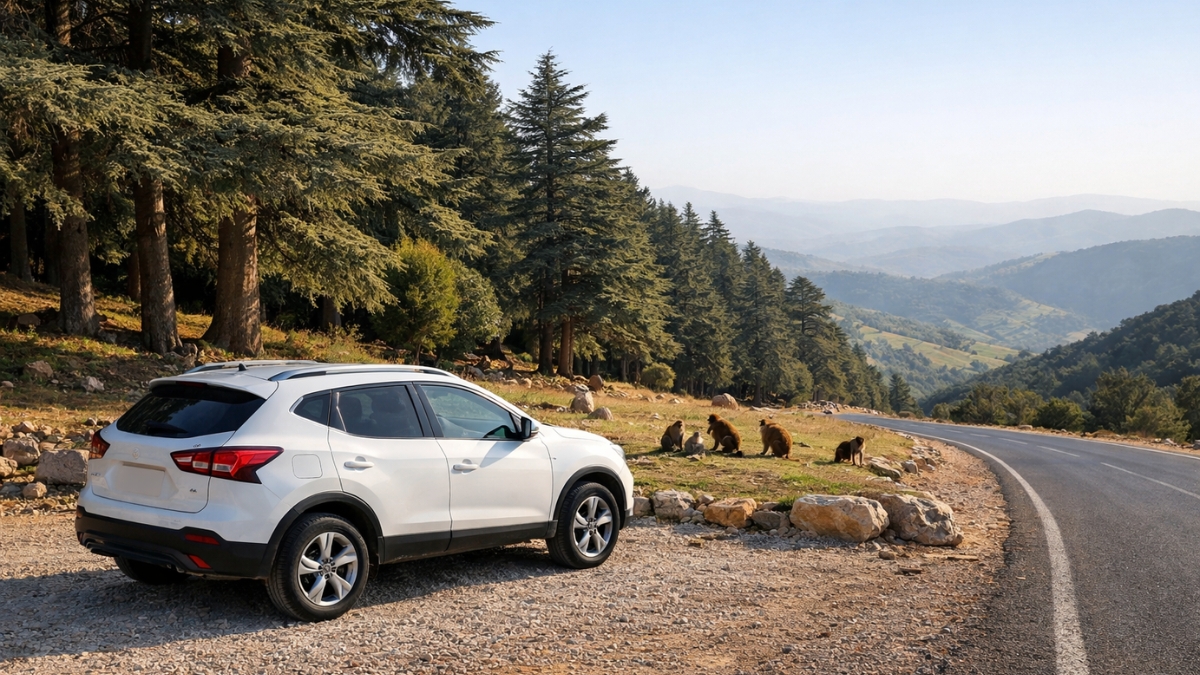
The drive from Fes to Azrou is one of the easiest “mountain escapes” you can do in a half-day or full-day trip, fresh air, cooler temperatures, and forest scenery that feels completely different from the city. But it’s also a route where visitors get caught out by three things: fast weather changes, monkey interaction zones, and parking choices near viewpoints.
This guide keeps it practical: how the road behaves, where drivers usually relax too much, how to handle monkey areas responsibly, and how to park in a way that protects both your car and the wildlife.
Table of contents
Route overview and what the road feels like
Best departure times and weather reality
Driving tips for the climb and the return
Monkey areas: what to do and what not to do
Safe parking: where problems start
Fuel, food, and stop planning
Family and group travel tips
FAQ
1) Route overview and what the road feels like
Most trips run from Fes toward Ifrane and Azrou via the main mountain road. You’ll leave city traffic, then climb steadily into the Middle Atlas. The road is generally paved and straightforward, but the “feel” changes in stages:
City exit zone: roundabouts, mixed traffic, sudden lane changes
Climb zone: longer curves, slower vehicles, occasional overtakes
Forest zone: shaded stretches, cooler air, more pedestrians near viewpoints
Azrou approach: local traffic, parked cars, people stopping quickly
The key idea: you don’t need aggressive driving? just smooth pacing and good spacing.
2) Best departure times and weather reality
Mountain weather can flip quickly compared with Fes. Even on a sunny day in town, forest areas can be colder, foggier, or wetter.
Timing that usually feels easiest
Leave Fes in the morning if you want relaxed roads and easier parking.
If you’re going on a weekend or holiday, earlier is better, popular stops fill up fast.
Weather tip that saves trips
If the forecast hints at heavy rain, dense fog, or very cold temperatures, reduce your plan: choose one main stop (forest viewpoint or Azrou) instead of trying to do everything.
For general safety and situational awareness while traveling in Morocco (including protecting valuables), this guidance is helpful: UK travel safety advice for Morocco. Read the official safety advice here.
3) Driving tips for the climb and the return
On the climb: stay patient and predictable
Keep distance behind slower cars, sudden braking happens on curves.
Overtake only when visibility is clear and you can complete it quickly.
Watch for parked cars near viewpoints that force vehicles into the lane.
In shaded forest sections: expect hidden slick spots
Shaded areas can hold moisture longer. Even when the road looks dry, you can get slick patches under trees, especially early morning or after light rain.
On the return to Fes: fatigue and speed creep
Many drivers return faster without realizing it. That’s when mistakes happen, late braking, tight corner entry, and tailgating. Keep the same calm pace you used on the way up.
Simple rule: if you feel rushed, it’s time for a 10-minute reset stop.
4) Monkey areas: what to do and what not to do
The Cedar Forest area is known for Barbary macaques. They’re wild animals, and tourist behavior strongly affects how bold they become around cars and people.
A useful conservation reminder: the Barbary macaque is listed as threatened and faces ongoing pressures, including habitat loss and human interaction issues. IUCN background on Barbary macaques.
What tourists get wrong (and how to avoid it)
Mistake 1: Feeding monkeys
Feeding encourages crowding and aggressive behavior, and it teaches macaques to target people and vehicles.
Mistake 2: Holding food “for photos”
Even unopened snacks, plastic bags, or a visible sandwich can pull monkeys toward your group fast.
Mistake 3: Leaving windows open
In busy monkey areas, open windows can become an invitation, especially if anyone is eating.
Better behavior in monkey zones
Keep food out of sight and don’t eat near the troop
Keep windows mostly closed when parked
Don’t chase, tease, or surround animals for photos
Give space, if monkeys move closer, you move back
5) Safe parking: where problems start
Parking trouble on this route usually isn’t about “crime everywhere.” It’s about tourists parking in the wrong type of place and making their car an easy target.
The safest parking choices
Park in busy, visible areas where other cars and families are present
Prefer designated lots or clearly used pull-offs over isolated roadside stops
If you can, choose a spot where you can see your car while you walk to the viewpoint
Where tourists get caught out
Isolated pull-offs
A quiet pull-off looks peaceful, but it also means fewer eyes on your vehicle.
Valuables left visible
A jacket covering a bag doesn’t help. Anything that looks like a bag invites curiosity.
Trunk “repacking” in public
Tourists often open the trunk and reorganize bags in plain view. That can broadcast where valuables are stored.
Parking checklist (quick and effective)
No bags on seats? ever
Phone mounts, chargers, and loose items removed from view
Park straight, wheels aligned (easier to exit calmly)
Lock, double-check, and walk away confidently (no repeated pocket searching)
6) Fuel, food, and stop planning
Even though this is a common route, don’t assume every stop will be convenient at the exact moment you need it.
Fuel
Top up before leaving Fes if you’re below half a tank. It’s one less variable, especially if you plan to explore multiple forest pull-offs.
Food
Bring water and small snacks, but keep them sealed and stored away when you’re near monkey areas. If you want a proper meal, plan it in a town stop rather than at the busiest viewpoint.
Bathroom stops
Build one planned stop into your day. It reduces rushed decisions and keeps the return drive calmer.
7) Family and group travel tips
If you’re traveling with kids, elders, or a group, the biggest improvement is assigning roles:
One person is “navigation + time”
One person is “bags + doors” (ensures nothing is left visible)
One person is “photo stop manager” (limits stop time and keeps everyone together)
For families: avoid “everyone out, everyone scattered” at monkey viewpoints. Keep the group close and calm, and treat it like a short nature visit?not a picnic zone.
FAQ
1) Is the road from Fes to Azrou difficult?
It’s generally straightforward, but it includes mountain curves and changing conditions. Calm pacing and spacing make it easy.
2) What’s the biggest mistake people make in the Cedar Forest area?
Feeding or teasing monkeys, and parking with valuables visible.
3) Can monkeys damage cars?
They can scratch or tug at items if food is visible and windows are open. Keep food hidden and windows mostly closed when parked.
4) Where should I park for viewpoints?
Choose busy, visible pull-offs or commonly used lots. Avoid isolated roadside stops where few people are around.
5) Should I drive this route in fog or heavy rain?
If visibility is poor, reduce your plan and drive slower. If conditions feel uncomfortable, postpone or shorten the trip.
6) What should I keep in the car vs. take with me?
Take valuables with you. Leave only low-value items, and keep the interior clear and tidy.
 Same prices and offers