
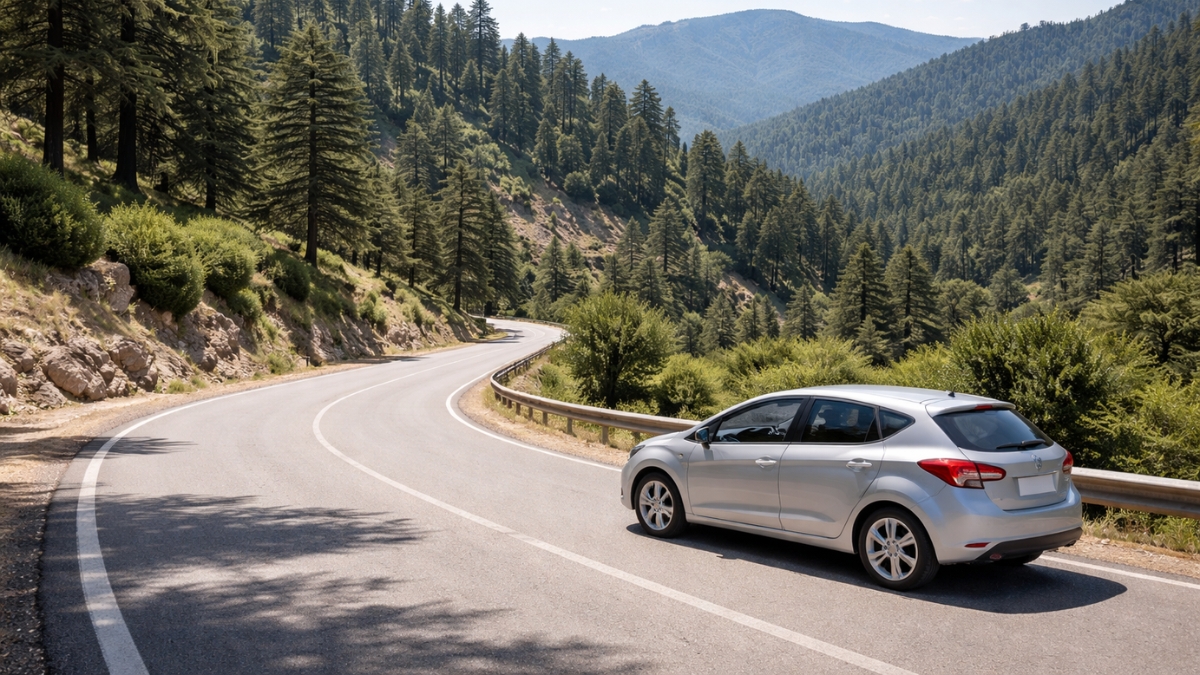
People hear “mountains” and “desert” and automatically assume a 4×4 is required. Around Fes, that’s usually not true. Most popular routes in the region are paved and doable in a normal compact car, as long as you stay on main roads, avoid night mountain driving in winter, and don’t try to “shortcut” onto tracks.
This guide breaks down what you can do with a standard car, when a 4×4 actually helps, and the rental-contract traps that create the biggest myths.
Table of Contents
Quick Answer
The Simple Rule: Road Type Beats Destination
Standard Car vs 4×4: What Changes in Real Life
Mountains Near Fes
“Desert” Trips From Fes
The Biggest Myths (and the Real Risk)
Rental Contract Reality: Where Coverage Fails
Quick Decision Guide
FAQ
Conclusion
Quick Answer
You don’t automatically need a 4×4 for the Fes region. A normal compact car is enough for Fes → Ifrane → Azrou and for the usual “desert gateway” drives that stay on paved roads. You do want a 4×4 if you plan to drive on unpaved tracks, chase viewpoints down rough routes, or travel in winter conditions when snow/ice affects mountain roads.
The Simple Rule: Road Type Beats Destination
A destination label (“mountains” / “desert”) is misleading. What matters is:
Paved main road (standard car works)
Broken pavement + potholes (standard car still works if you slow down)
Gravel track / sand / washouts (4×4 becomes useful, sometimes essential)
This is why people disagree online: they did different roads, not “different Morocco.”
Standard Car vs 4×4: What Changes in Real Life
What a 4×4 really gives you
Better traction on loose gravel, mud, and sand
More clearance for rutted tracks
Less anxiety when roads are degraded
What it does not magically fix
Snow/ice risk (you still need cautious driving and sometimes chains)
Visibility at night on winding mountain roads
Rental coverage exclusions (many companies still exclude damage on tracks)
A 4×4 helps when the surface is rough/loose. It doesn’t replace smart timing and route choices.
Mountains Near Fes
Middle Atlas day trips (mostly fine in a normal car)
The classic mountain loop from Fes into the Middle Atlas (Ifrane/Azrou/cedar forest zones) is typically paved and commonly driven in standard cars. Seasonality is the real variable: in winter, snow can disrupt travel and cause closures or difficult conditions in the Ifrane area.
When a standard car is enough
Spring, summer, autumn
Daylight driving
Staying on main routes between towns
When a 4×4 becomes “nice-to-have”
You want to explore side roads to remote viewpoints
You’re chasing “hidden spots” that are actually tracks
When a 4×4 can become “smart/safer”
Winter weeks with snow/ice warnings and closures in the Ifrane/Middle Atlas area.
Practical winter tip: If locals say certain stretches are restricted or closed due to snowfall, don’t “test it.” Detour or change plans.
“Desert” Trips From Fes
Most travelers mean one of two things:
1) Driving to Merzouga on paved roads
Going from Fes toward Merzouga on the main routes does not require 4×4 if you stay on asphalt. Multiple travel references (and plenty of experienced drivers) consistently note that the main approach roads are paved and a standard car is sufficient.
What changes is comfort, not capability:
It’s a long drive day if you do it in one go
Curves and elevation can slow your average speed
Fatigue matters more than drivetrain
2) Driving onto dunes/tracks (this is where 4×4 matters)
The moment you want to leave pavement near Erg Chebbi and drive on sand tracks, a 4×4 becomes the correct tool. Even then, many visitors choose to park and use a local 4×4 transfer instead of taking a rental car onto dunes (safer, less risk of getting stuck, fewer contract issues).
The Biggest Myths and the Real Risk
Myth 1: “You need a 4×4 for the Fes mountains.”
Reality: You need good timing (daylight) and winter awareness more than you need a 4×4. Snow disruption in the Middle Atlas can happen, so winter trips need flexibility.
Myth 2: “You need a 4×4 to drive to the Sahara.”
Reality: You need a 4×4 to drive on sand and tracks, not to reach the area on paved highways.
Myth 3: “4×4 means my rental insurance is safer.”
Reality: Many rental terms still prohibit unpaved roads or exclude major damage categories (undercarriage, tires, glass), which are exactly what rough roads threaten.
Rental Contract Reality: Where Coverage Fails
This is the part most people discover too late: the biggest risk isn’t getting stuck, it’s being uninsured when something happens.
Common clauses you’ll see in Morocco rental terms:
Unpaved/off-road driving prohibited (or only allowed with a 4×4)
“Full insurance” still excluding tires, glass, undercarriage in many packages
So the real question often becomes:
“Do I need a 4×4?”
vs
“Will my contract cover me if I take this road?”
If you want to explore rough routes, confirm in writing that (1) the road type is allowed and (2) what’s excluded (tires/undercarriage/glass).
Quick Decision Guide
Choose a standard compact if:
You’re doing paved routes around Fes + Middle Atlas towns
You’re visiting in spring/summer/autumn
You don’t plan to drive on tracks
You’ll drive mainly in daylight
Choose a 4×4 if:
You want off-road style detours (tracks, remote viewpoints, rough access roads)
You’re traveling in winter and expect snow/ice risk in higher elevations (and you’ll monitor closures)
Your group/luggage needs a sturdier setup and you’re okay with higher cost
Best “smart compromise”:
Rent a normal car for the region, and use local 4×4 transfers only for dune/track sections near the desert.
FAQ
Do I need a 4×4 to drive from Fes to Ifrane and Azrou?
No, not in normal conditions. Those routes are commonly done on paved roads. Winter snow/ice is the main reason plans change.
Do I need a 4×4 to reach Merzouga?
Not if you stay on the main paved routes. A standard car is typically sufficient for the road approach.
When is a 4×4 actually necessary near the desert?
When you leave pavement and drive on sand or rough tracks around the dunes (that’s where traction and clearance matter).
Is winter driving near Ifrane risky?
It can be. Snowfall can disrupt traffic and cause closures in the Ifrane/Middle Atlas area, so you should monitor conditions and avoid forcing mountain routes at night.
Does “full insurance” cover off-road damage?
Often no. Many policies and rental terms exclude unpaved roads and commonly exclude tires, glass, and undercarriage, exactly the items most likely to be damaged on rough roads.
What’s the biggest mistake people make on these trips?
Taking “shortcut tracks” to viewpoints or camps without checking if the road is allowed in the contract, and then discovering they’re liable for undercarriage/tire damage.
Conclusion
For the Fes region, you usually don’t need a 4×4, you need the right route choices. Standard cars handle the popular Middle Atlas drives and the paved approach toward the desert just fine. A 4×4 becomes valuable when you plan to drive on tracks or in winter conditions that can disrupt mountain roads. The most important step is aligning your plan with your rental contract so your trip stays both smooth and covered.
 Same prices and offers